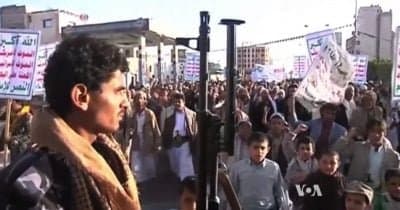
The recent declaration by Yemen’s Defence Minister Taher al-Aqili regarding an impending response to breaches of Yemen’s airspace by Iranian and Houthi forces has significant implications for regional stability. This statement follows a controversial incident involving an Iranian civilian aircraft landing in Houthi-controlled Sana’a, which not only violated a longstanding air blockade but also heightens the already fragile situation in Yemen's ongoing civil war.
Al-Aqili's assertion of a determined response should be viewed as a potential escalation of hostilities in the region. The Yemeni Civil War has already been marked by complex layers of conflict, and this incident adds another dimension that could destabilize further diplomatic efforts. The airspace breach is consistent with a pattern of intensified military activity in the region, especially with the backdrop of recent US and Israeli military actions against Iranian interests. Investors and analysts should take note of this development, as it could point to a protracted conflict that disrupts peace talks and other diplomatic engagements.
Escalating Tensions and Market Dynamics
Following Al-Aqili's statement, market sentiment appears to reflect a decreased likelihood of US-Iran diplomatic talks, as concerns over regional conflict mount. The geopolitical landscape in the Middle East has undergone significant shifts, and incidents such as these directly influence market pricing related to diplomatic negotiations. This recent breach may reinforce the idea that the road to peace is fraught with obstacles, further complicating the dynamics for investors and stakeholders involved.
Implications for Global Trade
Any military response from Yemen could have far-reaching implications, particularly regarding shipping routes in the Red Sea, a critical artery for global trade. This area remains pivotal for commercial transit, and any escalation in conflict could disrupt not only regional commerce but also have ripple effects on international markets. As developments unfold, it will be vital for observers to monitor the response from key actors, including the United States, Israel, and Iran, as their actions will significantly shape the trajectory of both the Yemeni conflict and broader regional stability.
This analysis is for informational purposes only and should not be considered financial advice.