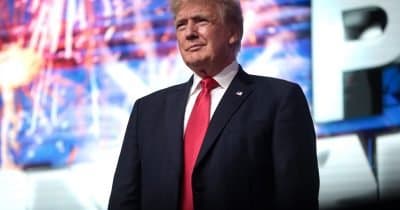
Former President Donald Trump has recently escalated rhetoric around a potential government shutdown in September, attributing the looming crisis to Senate Republicans' reluctance to abolish the filibuster. This procedural hurdle, which necessitates a supermajority of 60 votes for most legislation, has become a focal point in the ongoing negotiations over the SAVE America Act. As September 30 approaches, the stakes are high, with Trump's comments serving not only as a political maneuver but also as a warning of the very real consequences of legislative gridlock.
The current political climate is underscored by a backdrop of stalled bipartisan discussions, which have previously led to significant government shutdowns earlier this year, including a lengthy 76-day partial shutdown of the Department of Homeland Security. The ramifications of such shutdowns extend beyond mere politics; they ripple through fiscal policy, impacting funding for key federal agencies such as ICE and CBP. As history has shown, the inability to pass legislation may catalyze a repeat of past disruptions, further complicating an already fragile governmental structure.
In tandem with these political developments, market expectations regarding Federal Reserve rate cuts in 2026 have begun to shift. Current pricing indicates a moderate decrease in the probability of these cuts, suggesting market participants are bracing for a more cautious monetary policy amid potential political instability. With 77.6% of market activity supporting the notion that no rate cuts will occur, it seems investors are increasingly skeptical about the Federal Reserve's ability to navigate through the anticipated fallout from a government shutdown.
Implications for Monetary Policy
The intertwining of fiscal policy concerns and Federal Reserve actions is apparent as stakeholders closely monitor the situation. The potential for a government shutdown could signal to the Fed that a more conservative approach to monetary policy may be warranted, particularly if political instability persists. Any statements or decisions from Federal Reserve Chair Jerome Powell in the coming months will be scrutinized for signs of how the central bank plans to respond to these uncertainties.
Looking Ahead: Key Dates and Actions
As the September funding deadline draws near, attention will be focused on Senate Leader John Thune and other Republican senators. Their responses to Trump's pressure and the fate of the SAVE America Act could be pivotal in determining whether the filibuster remains or is abolished. This legislative decision will not only shape the immediate political landscape but will also have longer-term implications for fiscal stability and monetary policy direction in the United States.
This material is informational and should not be considered financial advice.