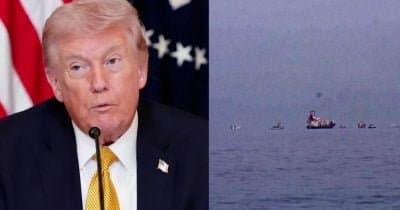
In a striking move, President Trump has called for countries to compensate the United States for its defense efforts in the strategically crucial Strait of Hormuz. This demand emerges amid heightened tensions in the region, particularly in light of ongoing conflicts involving Iran and the U.S.-Israel alliance. Trump's declaration arrives as the U.S. Navy has been actively escorting commercial vessels, reflecting an escalating military commitment under the auspices of “Project Freedom.”
The implications of Trump's statement extend beyond mere rhetoric. His suggestion of cost-sharing aligns with a broader strategy that may signal frustration with allies such as Japan, South Korea, Australia, and Spain, who have not contributed sufficiently to the operational costs in this volatile area. By proposing that these nations pay for U.S. military protection, Trump is reshaping the dynamics of international military collaboration, pushing towards a model where allies are expected to shoulder a greater share of security expenses.
Market Reactions and Strategic Consequences
Market observers are interpreting Trump's statements as indicative of increased military involvement in the Strait of Hormuz. Financial markets seem to reflect a cautious approach, with a noted decrease in confidence regarding a potential U.S. blockade on Iran by the end of July. However, there is an upswing in expectations for such a blockade to be more probable by December 31, suggesting that investors are bracing for evolving U.S. military strategies.
- Trump's call for payment could lead to significant shifts in military alliances and operational strategies.
- The potential for a U.S. blockade may heighten geopolitical tensions, impacting global oil markets.
- Allied nations' responses will be critical in assessing future U.S. military actions in the region.
As developments unfold, it will be essential to monitor statements from the U.S. Central Command and the State Department regarding military presence adjustments. Additionally, diplomatic engagements between Iran and neighboring countries will influence market perceptions of a blockade's feasibility. The responses from allies named by Trump regarding their willingness to contribute financially will also play a crucial role in shaping the future of U.S. military operations in the Strait of Hormuz.
This article is for informational purposes only and does not constitute financial advice.