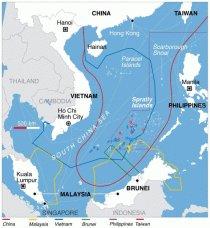
A recent joint declaration from multiple countries has explicitly rejected China’s maritime claims in the South China Sea, marking a significant diplomatic stance amidst ongoing territorial disputes. This statement reaffirms a 2016 international tribunal ruling that dismissed the legitimacy of China’s assertions, particularly those outlined in the contentious "Nine-Dashed Line." The ramifications of this development go beyond mere rhetoric, potentially influencing geopolitical tensions and market dynamics in the region.
Contextualizing the Maritime Dispute
The South China Sea has long been a flashpoint for conflict among several nations, including the Philippines, Vietnam, Malaysia, Brunei, and Indonesia. The waters are crucial not only for their political significance but also for their rich natural resources and shipping routes. China's expansive claims have led to persistent confrontations, especially with the Philippines. The new joint statement indicates a strategic alignment among these nations, signaling unified opposition to China's assertions.
Market Reactions and Consequences
In the wake of the joint declaration, market analysts have observed a reduction in perceived risks of military conflict, particularly between China and the Philippines. Pricing in related markets suggests a cautiously optimistic outlook, as the likelihood of clashes appears diminished. The geopolitical landscape may shift further depending on China's response to this collective stance.
- Increased diplomatic efforts may include initiatives such as a new communication hotline among affected nations.
- A potential withdrawal of Chinese vessels from disputed maritime zones could further ease tensions.
- A deterioration in relations could manifest through escalated military activities or renewed confrontations, particularly in sensitive areas like the Second Thomas Shoal.
Stakeholders are encouraged to monitor these developments closely, as they could significantly affect regional stability and economic conditions. The statement may act as a catalyst for more comprehensive diplomatic resolutions, thereby reducing the possibility of armed conflict.
This material is for informational purposes only and should not be considered financial advice.