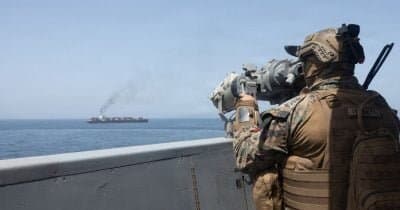
Renewed explosions across southern Iran, particularly in cities such as Minab, Sirik, Jask, Kangan, Qeshm, and Bandar Abbas, signal a significant escalation in the ongoing conflict involving U.S. military forces. This uptick in violence follows a breakdown of a recent ceasefire in the strategically vital Strait of Hormuz region, where U.S. Central Command (CENTCOM) has confirmed that it targeted around 90 Iranian military sites. These actions, framed as necessary self-defense measures against perceived Iranian aggression, have heightened tensions between the two nations.
Initially, Iranian state media attempted to downplay the situation by denying any explosions. However, they later acknowledged that “enemy projectiles” had indeed struck various locations, indicating a shift in narrative likely aimed at maintaining public morale while facing international scrutiny. The fallout from this conflict is not merely a military concern; it also reverberates through geopolitical and economic channels.
The implications for the market are noteworthy. Recent pricing in prediction markets indicates that investors are adjusting their outlook regarding the stability of the Iranian regime, with the likelihood of a regime change now assessed at 8.5%. Such a shift reflects a growing consensus that the current Iranian leadership may be at risk, a sentiment that could further influence foreign investment and economic strategies in the region.
As the conflict develops, it is crucial for observers to closely monitor the strategic responses from both U.S. and Iranian forces. Indicators of instability within the Iranian military, such as defections or significant political shifts, could signal a weakening regime, thereby affecting market perceptions. Additionally, official statements from CENTCOM or Iranian leadership will be vital in clarifying the intentions behind military actions and the potential trajectory of the conflict.
In light of these developments, markets are likely to remain jittery, reacting sensitively to news that could either reinforce the current regime's hold on power or suggest a growing vulnerability. Understanding the nuances of this conflict will be essential for investors looking to navigate the turbulent waters of geopolitical risk.
This material is informational and should not be considered financial advice.