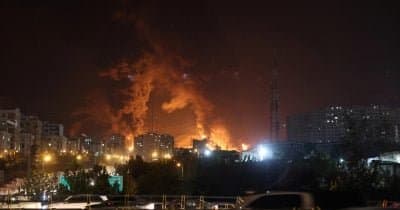
Recent developments concerning Iran's military actions against the United Arab Emirates (UAE) contradict claims of a ceasefire that were expected to bring a respite to the ongoing conflict. Despite assertions from certain sources that there have been no attacks since a specific date, reports show that Iran has indeed conducted multiple missile and drone strikes against the UAE since the conflict erupted in February 2026. This includes notable attacks in May 2026, occurring after a supposed ceasefire was announced, highlighting a persistent state of hostilities.
The conflict, which has been fueled by US-Israeli airstrikes on February 28, 2026, has positioned the UAE as a primary target for Iranian forces. The continued military actions raise critical questions about the stability of the region and the accuracy of information circulating in the public domain. Notably, a recent report from @zerohedge has led to some market participants interpreting it as a sign of de-escalation, which may have influenced trading behaviors and expectations in prediction markets.
This misinformation potentially paints a misleading picture of the situation, suggesting a decrease in Iranian military aggressiveness, which contrasts sharply with the ongoing conflict dynamics. The reality is that Iranian military operations appear to be intensifying, leading to increased uncertainty in the markets and among investors. As such, participants must remain vigilant and consider the implications of these developments on their trading strategies.
In light of these events, observers should closely monitor official communications from regional actors, particularly the Iranian leadership and Gulf states, as these will significantly shape both the trajectory of the conflict and its impact on market perceptions. The coming days may unveil further military engagements or diplomatic initiatives that could either escalate tensions or pave the way for renewed negotiations.
This material is informational and should not be considered financial advice.