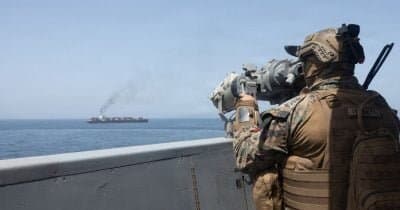
The situation between Iran and the United States has swiftly escalated, as Iran formally accuses the U.S. of breaching a ceasefire agreement through renewed military strikes. This accusation follows a specific incident involving an Iranian attack on a commercial vessel in the strategically vital Strait of Hormuz, illustrating the fragile nature of diplomatic engagements in the region. The U.S. military's recent strikes on Iranian coastal surveillance radar sites have raised significant concerns regarding the integrity of the Islamabad Memorandum from June 2026.
This breakdown in communication and mutual understanding signals a deteriorating relationship, one that could have considerable repercussions for stability across the Middle East. Market responses have already begun to reflect this heightened tension, with the probability of a complete airspace closure over Iran surging dramatically from 16% to 25.5% within just 24 hours. Such a closure could severely disrupt international shipping and air travel, drawing in global economic interests directly impacted by these developments.
Investors and market participants are advised to remain vigilant as they track any announcements from the Civil Aviation Organization of Iran (CAOI). A confirmed airspace closure could confirm the market's heightened fears and potentially trigger wider regional destabilization. Additionally, reactions from global leaders, including President Trump and Iranian media outlets, will likely further shape market expectations and investor sentiment. The potential for escalation is palpable, as both parties appear to teeter on the brink of full-scale conflict, reminiscent of earlier periods of heightened military engagement.
As we navigate these turbulent waters, investors would do well to consider the broader implications of a sustained military confrontation. Events such as the risk of complete airspace lockdowns could significantly alter trading dynamics and risk assessments in the fluid environment of Middle Eastern geopolitics. The international community must closely monitor these interactions, as the outcomes may well reverberate far beyond immediate territorial conflicts.
This article is for informational purposes only and should not be considered as financial advice.