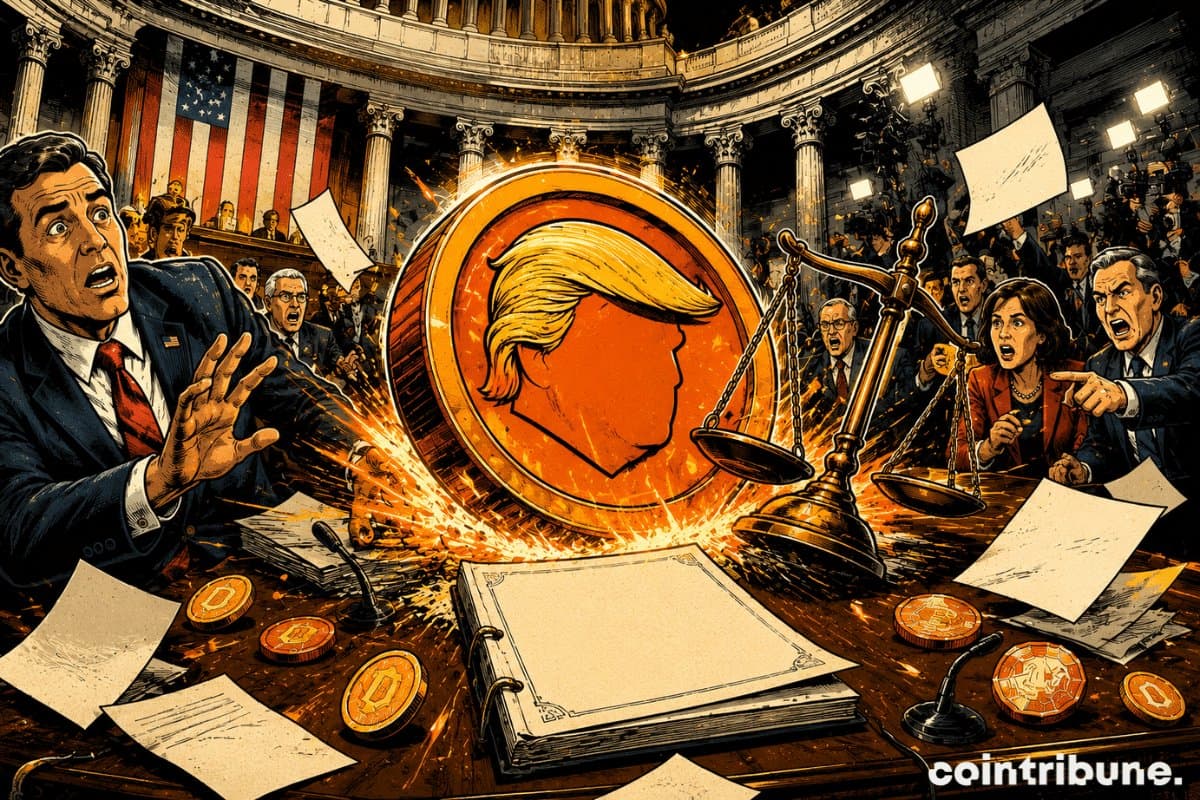
Two senators just demanded the SEC investigate the TRUMP memecoin, and the timing couldn't be worse for Washington's push to regulate crypto. Nearly a million wallets have lost $3.81 billion since the token launched in January. The offensive arrives exactly when the Senate is trying to pass the CLARITY Act before breaking for August, turning what started as a token dispute into a question about White House conflicts of interest.
Elizabeth Warren and Richard Blumenthal sent a formal letter to SEC Chair Paul Atkins accusing Donald Trump of actively promoting the coin to supporters while profiting roughly $636 million from the operation. The math is blunt: buyers who piled in after the president's endorsement got crushed. The senators aren't claiming conviction yet, just demanding regulators look into whether fraud or illegal enrichment happened.
The Numbers Behind the Collapse
TRUMP hit exchanges on January 17, three days before the inauguration. Trump then tweeted about it. From there, the token's trajectory split sharply. Early holders and the president himself cashed out enormous gains. Late buyers watched their money evaporate. The scale matters: we're talking nearly a million individual wallets, each holding a losing position. That's not noise.
The SEC already said memecoins usually aren't securities, so investigators would likely probe different angles instead. Communication to investors. How the sales were structured. Whether any deceptive practices occurred. That distinction actually broadens the potential scope of any investigation.
Crypto Bill Gets Tangled in Ethics
This matters because the Senate has five working days before August recess to move the CLARITY Act forward. The bill faced skepticism even without this distraction, but now crypto bills keep dying before the finish line. Adding a presidential memecoin scandal to that conversation doesn't help momentum.
The regulatory question itself remains legally messy. Nobody disputes that a token launched and promoted by the president creates an unusual situation. Whether that violates specific laws depends entirely on what regulators can prove about intent and disclosure. Warren and Blumenthal are pushing that investigation to happen now, while the Senate is deciding how strictly to regulate the entire industry.
This is informational analysis, not financial advice. Crypto markets are volatile and losses can be substantial.