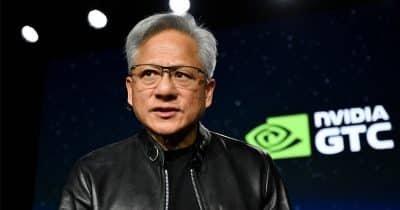
Nvidia is making significant waves in the AI chip landscape, having committed over $27 billion to partnerships, investments, and acquisitions. This sweeping strategy, led by CEO Jensen Huang, aims to redefine the competitive boundaries of the industry.
Understanding the Implications of Nvidia's Moves
The core of Nvidia's strategy, dubbed the 'AI factory', involves a transformative approach: instead of a zero-sum game among competitors, Nvidia seeks to create an ecosystem where it acts as the gravitational center. By engaging in collaborative efforts with former rivals, Nvidia is expanding its influence and capabilities across the AI infrastructure spectrum.
- Recent investments include a $2 billion stake in Marvell Technology.
- A strategic $5 billion co-development agreement with Intel.
- A landmark $20 billion acquisition of the AI-focused startup Groq.
This strategy not only consolidates Nvidia's position in AI training but also enhances its footprint in AI inference, a sector that is experiencing rapid growth as industries transition from model development to deployment at scale. The acquisition of Groq, which specializes in AI inference technology, is especially telling; it shows that Nvidia is proactively addressing potential vulnerabilities in its service offering.
Nvidia's Collaborations: A New Kind of Competition
These partnerships mark a significant shift in the tech landscape. For example, Intel, previously a potential competitor to Nvidia, is now a crucial ally in co-developing cutting-edge chip technology. This shift exemplifies how strategic alliances can result in a complementary relationship rather than an adversarial one. Such alliances could foster innovation, leading to more effective solutions for end-users.
The synergy created by pooling expertise allows Nvidia to focus on its core competencies while leveraging the specialized skills of its partners. This could reduce time-to-market for new technologies, further solidifying Nvidia's competitive edge.
Looking Ahead: Market Reactions and Future Considerations
Investors and market analysts should keep a close eye on these developments. As Nvidia integrates these partnerships, it will be crucial to monitor how this impacts its stock performance and the broader AI sector. Additionally, understanding the implications of Nvidia's AI token generation approach unveiled at GTC 2026 will be essential, as it may introduce novel revenue streams based on AI outputs.
Ultimately, the key questions moving forward include: How will these strategic partnerships affect competition within the AI chip market? What additional moves might Nvidia make to strengthen its dominance? Stakeholders in the AI and tech industries would do well to stay informed about these dynamics.
Disclaimer: This material is for informational purposes only and does not constitute financial advice.