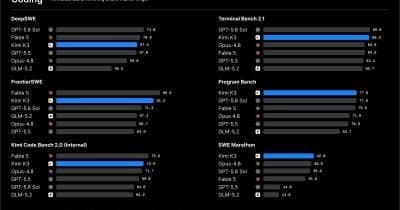
Moonshot AI, a Beijing startup backed by giants Alibaba and Tencent, unveiled its new AI model Kimi K3 on July 16, 2026. This model features 2.8 trillion parameters and has an open-weight design, placing it third on the global Artificial Analysis Intelligence Index. Kimi K3’s performance notably surpasses established competitors like Anthropic and OpenAI in front-end coding tasks and multiple agentic and coding benchmarks. This leap challenges the previously uncontested supremacy of industry leaders.
Competitive Pricing and Market Positioning
The strategic pricing of Kimi K3’s API, set 40-50% below OpenAI’s GPT-5.6 Sol, signals a disruption not only in performance but also in cost accessibility. This aggressive undercutting could accelerate adoption, especially among developers and businesses sensitive to pricing structures. Moonshot AI’s approach may pressure existing players to reconsider their pricing models or risk losing market share.
Implications for Anthropic and Market Valuations
The emergence of Kimi K3 has already influenced market sentiment, particularly regarding Anthropic’s valuation prospects. Although prediction markets currently show a 91.5% likelihood that Anthropic will reach a $1.25 trillion valuation by the end of 2026, the introduction of a formidable competitor like Kimi K3 introduces new uncertainties. Investors and analysts will closely observe how Anthropic navigates this competitive pressure, especially whether it can secure additional funding or strategic partnerships to maintain its lead. Movements in Anthropic’s valuation metrics on platforms such as the Nasdaq Private Market could serve as early indicators of shifts in investor confidence.
Market observers should also monitor Kimi K3’s adoption rates and performance updates, as these will further shape competitive dynamics in the AI space. The launch of Kimi K3 echoes trends similar to pricing disruptions detailed in China’s AI pricing undercutting US competitors.
Following Kimi K3’s debut, Anthropic shares experienced a moderate decline. Market participants appear to be cautiously adjusting valuations in response to the new entrant.
This article is for informational purposes and does not constitute financial advice.