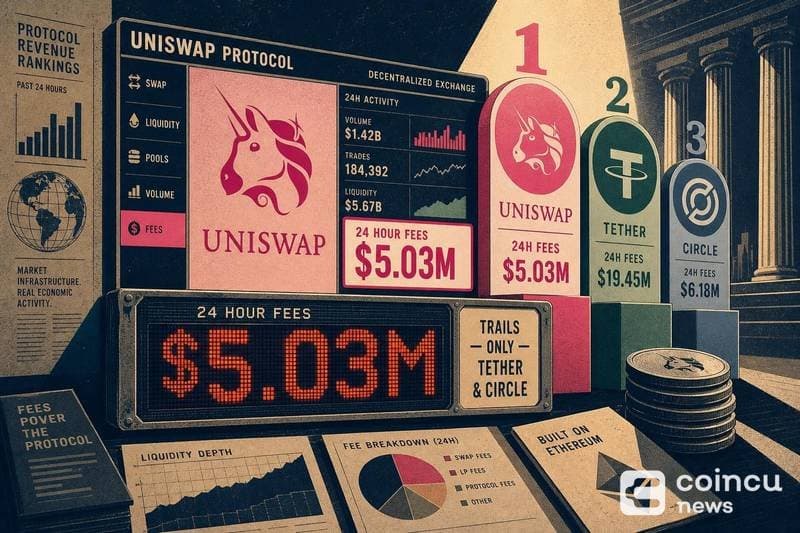
Uniswap, one of the leading decentralized exchanges (DEXs), has recently seen its daily fees soar to approximately $5.2 million. This remarkable figure places Uniswap at the forefront of the current crypto fee ranking, showcasing its dominant position within the decentralized finance (DeFi) ecosystem. A significant contributor to this surge is the Robinhood Chain, which alone accounted for about $4.38 million of the total fees collected, easily surpassing the performance of both Ethereum and Base during the same timeframe.
However, despite these impressive figures, it is important to note that only around $73,454 was classified as protocol earnings for Uniswap. This discrepancy highlights a broader issue within the DEX landscape, where the majority of swap fees are still absorbed by liquidity providers and traders. Such dynamics raise questions about the sustainability of revenue streams for decentralized exchanges and their long-term profitability.
The rise in fees correlates with an increase in trading volume on the Robinhood Chain, indicating a growing interest in this alternative blockchain among users. This trend could suggest a shift in user behavior as traders seek lower costs and more efficient platforms, which could have implications for established networks like Ethereum. The growing popularity of Robinhood Chain may also signal a diversification of trading venues in the crypto space, as users explore various options to optimize their trading activities.
For investors and stakeholders in the DeFi ecosystem, these developments emphasize the importance of monitoring fee structures and trading volumes across different platforms. As fees rise, the competitive landscape among DEXs may evolve, leading to potential shifts in market share as users gravitate toward platforms that offer more favorable trading conditions. Furthermore, the implications of Robinhood's entry into the space could reshape not only user engagement but also the overall sentiment surrounding Ethereum and other established protocols, as discussed in our article on Robinhood's impact on market sentiment.
This material is for informational purposes only and does not constitute financial advice.