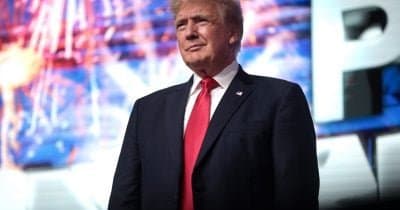
Donald Trump has voiced his strong support for the Clarity Act through his platform, Truth Social, where he urged the U.S. Senate to prioritize the passage of this essential legislation. The former President’s backing underscores a broader concern regarding the need for the United States to retain its competitive edge in the rapidly evolving fields of financial technology and artificial intelligence. With warnings about potential Chinese dominance in these sectors, Trump's endorsement serves to highlight the geopolitical stakes involved.
The Clarity Act aims to provide much-needed regulatory clarity for digital assets and AI technologies. By establishing a clearer framework for these emerging innovations, the legislation could potentially ease the path for businesses operating in these spaces. However, recent commentary from market participants indicates a degree of uncertainty. Notably, prediction markets have displayed mixed reactions, with confidence in the bill's passage dipping slightly from 46% to 44% in the past day. This fluctuation may reflect skepticism about whether Trump's influence will translate into tangible legislative action.
Importantly, Trump's endorsement comes at a time when legislative discussions are already underway in Congress. Observers are keenly aware that key legislative figures, such as Senate Majority Leader Chuck Schumer and House Speaker Mike Johnson, hold significant sway over the bill's fate. Their reactions to Trump's remarks could either bolster or hinder the momentum of the Clarity Act. Additionally, developments from the Senate Banking Committee and the House Financial Services Committee will be critical in determining the future trajectory of the legislation.
Looking ahead, Trump's potential future statements or those from the White House may further influence market sentiment. Specific legislative timelines or plans could provide the clarity that investors and market participants are currently seeking. As this scenario unfolds, the Clarity Act will not just be a legislative measure; it represents a crucial choice in defining the U.S. stance on emerging technologies at a time when global leadership is increasingly contested.
This material is informational and not financial advice.