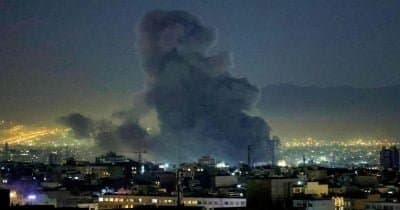
Air raid sirens blared across Bahrain recently, marking a significant escalation in tensions within the Gulf region. This alarming development follows a series of missile attacks launched by Iran, which have sparked conflicts involving the US, Israel, and Iran. Although many of these missiles were intercepted and no casualties reported, the situation has prompted Jordan to suspend flights at Amman Airport as a precautionary measure.
The backdrop of this escalation is a series of retaliatory measures taken by Iran against US and allied forces following airstrikes on Iranian facilities. While the conflict has not yet escalated into full-scale warfare, the heightened security concerns are palpable across the Middle East, prompting investors to reassess risks associated with regional stability.
Market Reactions and Implications
Market activity indicates an increasing apprehension regarding potential airspace closures, particularly in Israel. Analysts are closely monitoring the likelihood of Israel closing its airspace, especially as the end of July approaches. The pricing in financial markets reflects a growing perception of increased risk, which could impact various sectors, particularly those reliant on air travel and logistics.
Moreover, the suspension of flights in Jordan not only underscores the immediate effects of the conflict but also highlights the broader implications for regional economies. The uncertainty surrounding Iran's military actions may influence market dynamics significantly, especially regarding airspace security and trade routes.
Investors should remain vigilant as key decisions from Israeli authorities, including military leaders, could further sway market sentiment. Ongoing military actions by Iran against Gulf states may usher in new waves of volatility, affecting everything from oil prices to equity markets.
This article is for informational purposes only and should not be considered financial advice.