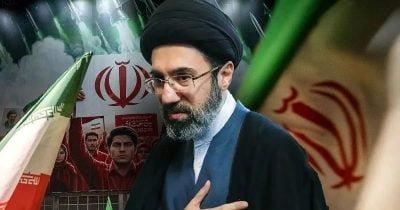
The recent funeral of Iran's former Supreme Leader, Ayatollah Ali Khamenei, has raised pressing questions about the stability of leadership in Iran, particularly regarding the future of his successor, Mojtaba Khamenei. Notably, Mojtaba's absence at this significant event due to reported security concerns underscores the fragile nature of his anticipated leadership.
Leadership Concerns in a Turbulent Region
The late Ayatollah Khamenei's death, resulting from a US-Israeli airstrike earlier this year, marks a pivotal moment in Iranian politics. The funeral itself spanned five cities in Iran and Iraq, with the attendance of three of Khamenei’s sons highlighting the family's mourning yet casting a shadow on the continuity of governance due to Mojtaba's notable absence. Security issues surrounding Mojtaba emphasize his potential vulnerabilities as a future leader, which can dramatically influence Iran's internal stability and geopolitical standing.
Market Implications of Leadership Instability
Market indicators reflect an increase in perceived instability in Iranian leadership. Predictions of potential governance disruptions by the end of 2026 are being adjusted as market participants reassess the likelihood of a coherent leadership structure in Iran. The presence of powerful entities like the Islamic Revolutionary Guard Corps (IRGC) in governance complicates the matter further, adding to the uncertainty. The lack of a visible successor like Mojtaba Khamenei at such a significant event raises crucial questions about who genuinely wields power and how effectively future leadership can maintain order.
Future Developments to Watch
Investors and political observers should closely monitor upcoming developments from the Assembly of Experts and moves by the IRGC, as any statements or actions from these bodies could either clarify or further cloud the current leadership landscape. Furthermore, Mojtaba Khamenei's public appearances and endorsements will be vital in shaping perceptions of stability moving forward. With evolving dynamics, the global community will also watch for international responses to Iran's leadership changes, which can significantly influence both regional security and broader market pricing.