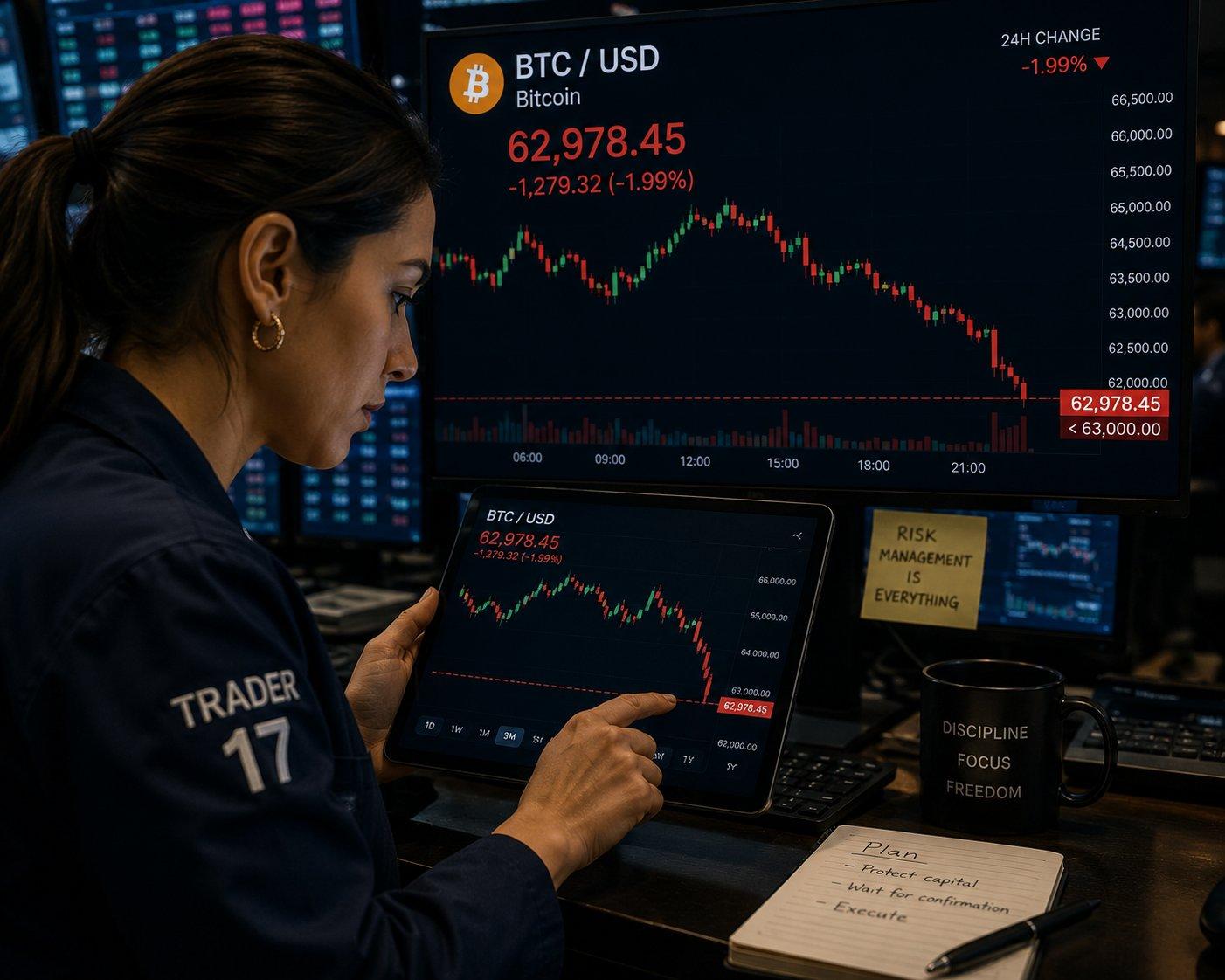
As Bitcoin navigates through 2026, it finds itself at a critical juncture marked by instability and significant volatility. After a staggering decline of almost a third of its value in the first half of the year, the world’s largest cryptocurrency is grappling with multiple forces exerting pressure from different angles. Understanding these dynamics is essential for investors trying to decode Bitcoin's current trajectory and future potential.
Understanding the Current Landscape for Bitcoin
The importance of this situation cannot be overstated. Currently trading around $63,200, Bitcoin is oscillating within an intraday range of $61,350 to $64,435, showcasing a market still in search of firm conviction. This ongoing volatility can be attributed to:
- $223.5 million in recent net inflows into U.S. spot Bitcoin ETFs, led by Fidelity’s significant contribution of $166 million.
- A concerning shift in strategy from long-term accumulation to monetization, exemplified by the sale of 3,588 BTC by a key investor, resulting in an $8.32 billion loss in Q2 2026.
- The psychological barrier of the $60,000 support level, which serves as a critical technical threshold influencing traders' sentiment.
Moreover, Bitcoin is currently viewed as a high-duration risk asset, struggling to maintain its status as a defensive store of value amid macroeconomic pressures such as rising interest rates and geopolitical uncertainties. This context suggests that the cryptocurrency market is influenced by external economic factors just as much as internal sentiment dynamics.
The Broader Implications of Bitcoin's Performance
Bitcoin's poor performance in 2026, the worst since at least 2015, indicates potential structural shifts in investor priorities. The allure of established stocks, particularly in the artificial intelligence sector, poses a challenge for Bitcoin as investors favor narratives that appear more robust in the current climate. The heightened competition for investor attention raises questions about Bitcoin's role in a diversifying portfolio and its long-term relevance as institutional adoption continues to evolve.
Looking Ahead: Critical Factors to Monitor
For investors, the path forward for Bitcoin remains uncertain and merits close observation of several key factors:
- Maintaining or breaking the psychological support level of $60,000 will be critical for determining short-term price movements.
- Continued ETF inflows or outflows could signal shifts in institutional interest and market sentiment.
- Macro events, including interest rate adjustments and geopolitical developments, will remain influential in shaping Bitcoin’s viability as an investment.
As the market continues to adjust, astute observers will need to remain vigilant about these dynamics. Understanding how these variables interact could provide insights into not only Bitcoin’s future but also the wider cryptocurrency ecosystem that is highly interconnected in these turbulent times.
This material is for informational purposes only and does not constitute financial advice.