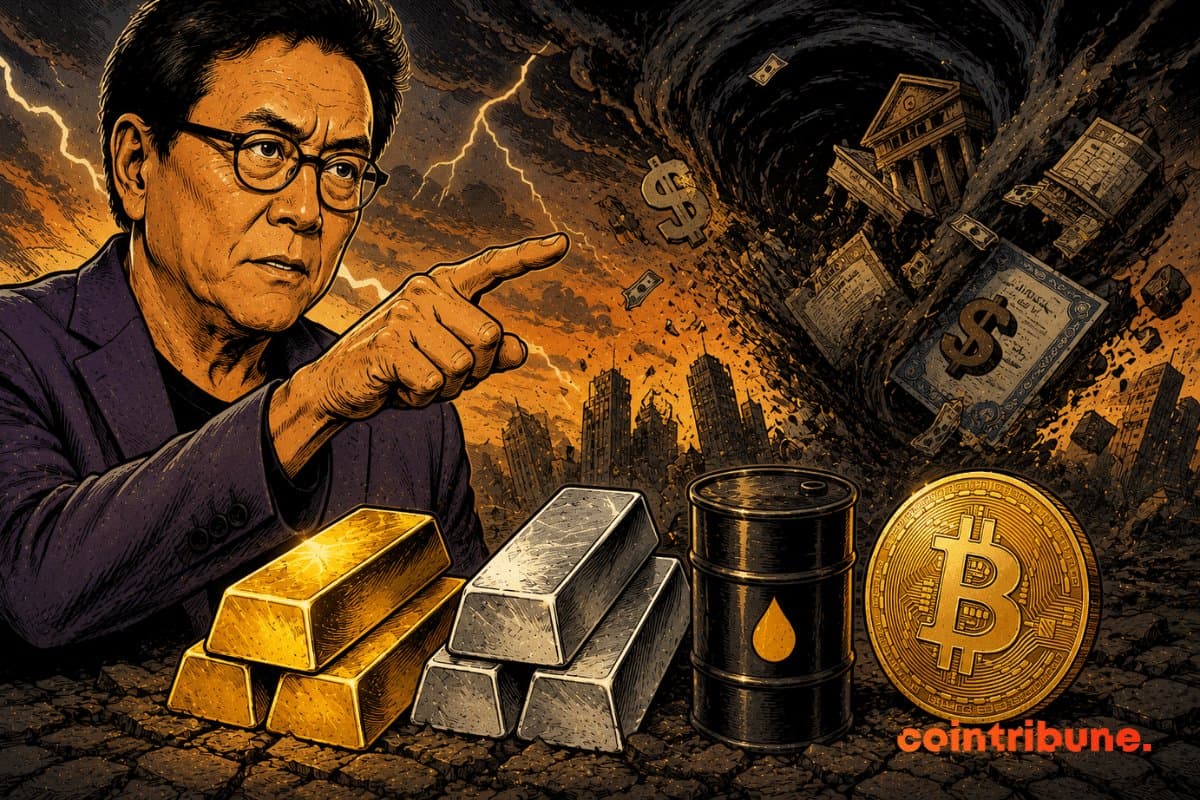
Robert Kiyosaki, author of the well-known book “Rich Dad, Poor Dad,” continues to stir the financial waters with his bold assertions about the impending economic collapse. His recent statements underscore a fundamental belief that traditional assets reliant on trust will be decimated in the next financial crisis, leaving behind only what he terms as 'real' assets: gold, silver, oil, and Bitcoin.
This warning is not just alarmist rhetoric. With the U.S. national debt hovering around $39.5 trillion and household debt approaching $18.8 trillion, Kiyosaki's concerns resonate with the harsh realities faced by many Americans. The current economic landscape is marked by rising interest rates, exemplified by an average credit card rate of 23.79%, which has forced many families to make drastic choices, such as skipping meals to conserve funds.
Kiyosaki's argument posits that fiat currencies, and by extension many financial instruments such as bonds and ETFs, are fundamentally unstable what he refers to as 'fake' currencies. He suggests that during times of crisis, people will turn toward tangible assets that do not depend on external trust, framing gold as the 'money of God' and Bitcoin as 'the money of the people.'
However, this raises a critical question within the cryptocurrency community: Is Bitcoin truly a trustless asset? While proponents argue that Bitcoin operates on a decentralized protocol, skeptics point out that it still depends on the trust in its underlying technology and security. This paradox highlights the ongoing debate regarding Bitcoin's role as a hedge against economic instability.
Kiyosaki’s continuous predictions of doom since the 1970s have led some to dismiss his forecasts as the cries of a doomsayer. Yet, with current economic indicators validating some of his concerns, investors must weigh the potential implications of his advice seriously. As the financial landscape evolves, the focus will likely shift towards understanding which assets can truly withstand economic turmoil. The role of commodities and cryptocurrencies in this environment will be key to guiding investor strategies moving forward.
This material is informational and should not be considered financial advice.