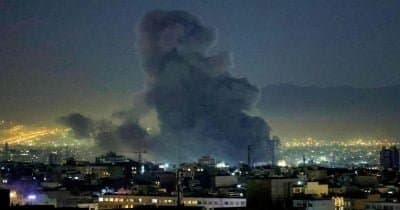
Recent reports indicate that Iranian missiles have targeted the Mu’aqqab al-Saltani airbase in Jordan, a critical facility shared by both the Royal Jordanian Air Force and U.S. military forces. This escalation is not an isolated incident but part of a broader regional conflict that erupted earlier this year, following U.S.-Israeli strikes on Iranian assets. The situation underscores a significant shift in the dynamics of Middle Eastern geopolitics, particularly regarding U.S. relations with its allies and Iran's retaliatory posture.
As tensions rise, Jordan has reportedly intercepted most missiles, preventing any confirmed casualties or extensive damage. However, the implications of these missile strikes extend far beyond immediate physical damage, highlighting Iran's strategy to challenge U.S. influence in the region by targeting its allies.
Market Reactions and Geopolitical Consequences
The market's response to these developments reflects heightened anxiety about the regional stability, particularly concerning airspace safety. There has been a notable uptick in the likelihood of Iran enforcing a full closure of its airspace, with current estimates suggesting a rise from 16% to 24% in just a day. Such moves would not only complicate military logistics for the U.S. and its allies but also impact commercial air traffic in the region.
Analysts expect that further announcements from Iran's Civil Aviation Organization regarding airspace policies could generate significant fluctuations in market pricing. Likewise, statements from both Iranian state media and U.S. officials in the days leading to the July 31 deadline will be critical to shaping investor sentiment and market expectations.
The Broader Implications for Investors
These developments compel investors to reassess their positions as geopolitical uncertainty increases. The potential for further military actions could lead to volatility not only in the defense sector but also across various markets linked to Middle Eastern stability. The situation may serve as a catalyst for investors to diversify their portfolios or seek exposure in areas less affected by geopolitical risk.
In summary, the ongoing Iranian threat to U.S. military assets, coupled with its broader strategy against regional allies, presents a complex landscape for investors and policymakers alike. Any shifts in military engagements or airspace regulations could lead to substantial changes across capital markets and geopolitical assessments.
This article is for informational purposes only and should not be construed as financial advice.