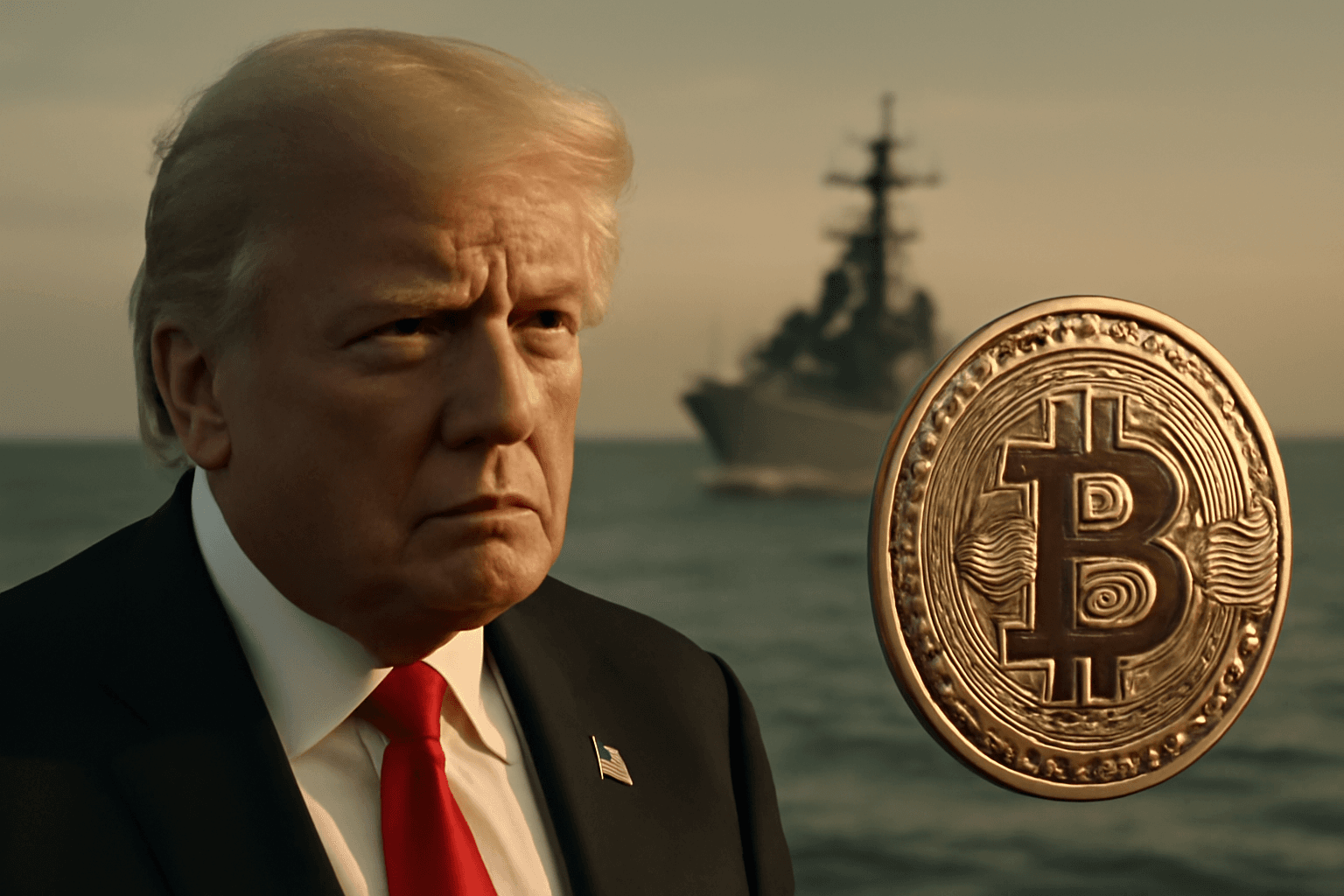
In a surprising turn of events, Bitcoin has seen a decline exceeding 2%, dipping towards the $62,000 mark after former President Donald Trump announced the reinstatement of a blockade on the Iranian shipping routes in the Strait of Hormuz. This geopolitical maneuver comes with a significant cargo fee of 20% for ships traversing these waters under U.S. protection, a policy that could instigate waves of uncertainty in global trade dynamics.
The reinstated blockade primarily targets Iranian vessels while allowing ships from other nations to navigate freely, signaling a strategy that may escalate tensions in an already volatile region. This approach reflects a broader tactical shift as Trump labeled the U.S. as the "guardian of the Hormuz Strait," reasserting American influence over a critical oil shipping corridor. As a result, Polymarket traders now estimate a mere 16% chance for the quick normalization of Hormuz shipping, underscoring deepening concerns about ongoing geopolitical strife and its rippling effects through various markets.
Bitcoin's Reaction to Geopolitical Uncertainty
The immediate decline in Bitcoin's price, which earlier reached above $64,000, can be attributed to this resurfacing geopolitical uncertainty. Presently trading at approximately $62,240, Bitcoin has fallen nearly 3% within the last 24 hours, indicating a potential shift in investor sentiment towards risk assets. As the cryptocurrency falters below significant Fibonacci retracement levels, it highlights a fragile market structure, thrust into a descending channel that has persisted since May. The challenges are compounded by the psychological barrier of $60,000, a critical threshold for many traders.
Despite the downturn, the Chaikin Money Flow indicator suggests that capital inflows remain slightly positive, hinting at underlying bullish sentiment that hasn't completely eroded. However, the technical resistance presented between $63,200 and $64,600 remains formidable, capping recovery attempts and raising doubts among traders about Bitcoin's resilience in the face of adverse external factors.
Market Implications and Future Outlook
The renewed geopolitical tension and Trump’s announcement regarding the Hormuz route may have longer-term implications for the cryptocurrency market. Traders are adjusting their expectations, increasingly pessimistic about a swift return to stable shipping conditions. Such sentiments could result in further volatility across various asset classes, including cryptocurrencies, as investors reevaluate risks in light of recent developments.
As Bitcoin navigates these turbulent waters, market participants should remain vigilant about extrinsic factors, particularly emerging geopolitical tensions that have historically influenced trading patterns. The interplay between traditional commodities like oil and cryptocurrencies could dictate future price movements and overall market health.
This material is informational and not financial advice.