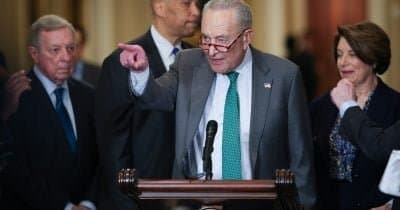
Senate Democrats have taken a bold step by blocking a $1.15 trillion Pentagon policy bill, reflecting a significant shift in legislative dynamics as they demand greater oversight on military actions against Iran. This blockade is not just a procedural maneuver but a strategic play aimed at curtailing President Trump's unilateral military operations amidst rising tensions in the ongoing Iran War.
Key Legislative Facts
The decision to block the military spending bill shows a growing bipartisan concern regarding unchecked military power. In recent months, the U.S.-Iran relationship has been strained due to Iranian attacks on commercial vessels, prompting retaliatory strikes by U.S. forces. Democrats are leveraging the substantial defense budget as a means to enforce a vote on a War Powers Resolution, a crucial step that would require Congressional authorization for military action.
Such legislative maneuvers suggest that the current administration may face increased scrutiny over its military engagements, particularly in volatile regions like the Middle East. The demand for oversight could potentially reshape U.S. military strategy if Congress asserts its authority more forcefully.
Market Reactions and Implications
Market analysts are reacting to this blockade with caution. The likelihood of an end to the Iranian blockade by mid-August seems to be decreasing, indicating that investors are pricing in the geopolitical uncertainties that typically accompany military conflict. This sentiment is likely to affect sectors reliant on stability in the region, such as oil and gas, as well as broader market performance.
Moreover, the implications of this legislative action could ripple beyond immediate military concerns. Observers will be closely watching statements from President Trump and military leaders, which could signal shifts in U.S. policy. The trajectory of the War Powers Resolution discussions may also influence investor confidence and market perceptions regarding the timeline for a potential diplomatic resolution with Iran.
This article is for informational purposes only and does not constitute financial advice.