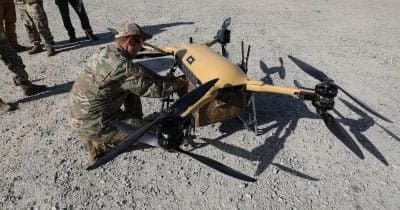
“The cost equation of modern warfare is shifting,” says industry expert Michael Reynolds regarding the recent $500 million contract awarded to Perennial Autonomy by the US Army. The deal emphasizes the growing reliance on low-cost drones, such as the Merops interceptor and Bumblebee quadcopter, as part of a broader strategy to counteract the increasing threat posed by enemy unmanned aerial systems.
The contract, structured as an indefinite-delivery/indefinite-quantity agreement, raises critical questions about the scalability and reliability of drone production by defense startups. Perennial Autonomy, although promising, will need to overcome the production hurdles that have historically hampered other companies in the defense sector. This is particularly noteworthy given that the recent conflict in Ukraine has starkly illustrated the cost disparity in drone warfare; a commercially available drone can cost just a few hundred dollars, while the missiles needed to destroy them can exceed $1 million.
Moreover, the competition is intense. AeroVironment, a more established player in the defense world, has also secured a $500 million contract aimed at neutralizing small unmanned aerial systems. Following this announcement, AeroVironment's stock surged by about 11%, reflecting investor confidence in the growing market for drone technology. As defense technology becomes an increasingly critical aspect of military strategy, investors are closely watching how these contracts will affect the future of defense spending and the performance of companies involved.
The outcome of these contracts is not just about immediate military capabilities; they signal a paradigm shift in defense procurement. The increasing demand for low-cost, effective solutions in military operations hints at a new direction for defense investments. Investors must now assess not only the viability of the products but also the operational capacity of these startups to deliver on their promises.
This article is for informational purposes only and should not be considered financial advice.