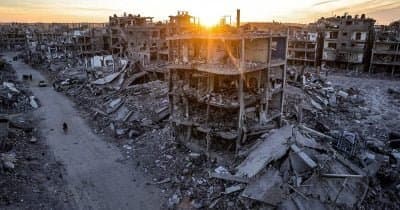
"The situation is deteriorating rapidly," commented a Middle East analyst following Israel's military expansion in Gaza. The move to extend control over nearly 70% of the Gaza Strip through the so-called "yellow line" marks a significant departure from the October 2025 ceasefire agreement with Hamas. This territorial squeeze exacerbates the humanitarian crisis by forcing an already displaced population into a shrinking area, escalating tensions on the ground. From an investor perspective, such developments introduce heightened volatility and uncertainty across markets sensitive to Middle Eastern geopolitics.
Prime Minister Benjamin Netanyahu's directive to intensify military presence signals a strategic shift toward hardline policies, drawing sharp criticism from Hamas and the UN, who accuse Israel of breaching the fragile truce. This breach undermines not only the ceasefire but also regional diplomatic efforts aimed at stabilizing the area. The consequences of this are far-reaching: increasing the risk of conflict escalation that could draw in other regional actors. Market participants are watching closely for reactions from influential groups like the Iranian IRGC and the Houthi leadership, whose potential military responses would further destabilize the region.
Interestingly, prediction markets have priced in a slight increase to a 10.5% probability of Houthi military action against Israel by the end of July 2026. This marginal rise reflects growing concerns over spillover effects from Gaza's instability. Financial instruments linked to defense sectors and Middle Eastern markets may experience amplified volatility amid this environment. Traders and investors would be well-advised to monitor statements from key Houthi figures such as Yahya Saree and Abdul-Malik al-Houthi, as well as decisions from Israel’s Security Cabinet. Such developments could serve as catalysts for abrupt market movements.
These shifts come at a time when geopolitical friction is already influencing crypto and traditional asset classes. For those tracking crypto volatility linked to geopolitical tensions, recent analyses provide context on how military conflicts have historically affected market dynamics. The ongoing Gaza escalation shows a fragile peace with high risks of unraveling, potentially affecting not just regional stability but global investor sentiment.
This material is intended for informational purposes only and does not constitute financial advice.