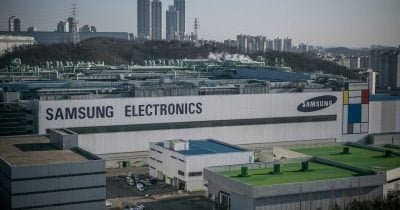
SK Hynix overtook Samsung Electronics to become South Korea's most valuable company, with a market capitalization reaching 2,080.4 trillion won ($1.35 trillion) on June 23, 2026. This remarkable shift stems from SK Hynix’s dominance in high-bandwidth memory (HBM) chips, essential for AI workloads, propelling its stock over 300% year-to-date. The rise signals a tectonic rearrangement in the semiconductor industry and casts Seoul as a key AI sensitivity gauge for global investors.
Market Facts: The Semiconductor Power Shift and KOSPI Volatility
By 2025, SK Hynix commanded about 61% of the global HBM market, compared to Samsung’s 17% and Micron’s 21%. This means SK Hynix secured nearly three out of every five dollars spent on the vital memory chips behind AI training and inference. Operating profits more than doubled to 47.2 trillion won, fueled by insatiable demand from hyperscalers expanding AI infrastructure. next-generation HBM4 chips fetched a 20-30% premium in early 2026, intensifying earnings momentum.
The KOSPI index mirrored these turbulent forces: it surged 8.2% on June 9 yet plunged 8.8% the prior day after Broadcom’s cautious supply-chain outlook spooked markets worldwide. South Korea’s $4 trillion equity market, already key, now hinges on government announcements promising significant AI and semiconductor investments aimed at cementing the country's AI supply chain status.
Investor Reaction: Evaluating Premiums and Announcements Amid Risk
The sustained HBM4 price premium could lead to continued upward revisions in SK Hynix’s earnings forecasts, potentially widening its lead over Samsung. However, market participants face notable risk: in an environment where the KOSPI swings 8% on single supply-chain updates, chasing headline commitments without tracking actual execution could prove costly.
Investors should monitor tangible milestones rather than announcements alone. The liquidity and volatility tied to AI chip supply directly affect broader equity moves, underscoring Seoul’s role as a real-time AI risk barometer. These dynamics echo themes similar to those in crypto markets, where tech-driven nodes create ripple effects, exemplified by speculative surges in other sectors.
This material is informational and not financial advice.