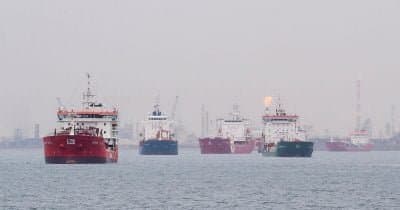
Currently, around 135 million barrels of Russian crude oil are stranded on tankers, representing a month's worth of typical exports. This alarming backlog is a direct consequence of several converging factors affecting the oil industry.
Factors Behind the Backlog
The accumulation of crude oil at sea is primarily driven by three key elements. Firstly, ongoing Ukrainian drone strikes have severely damaged over 15 Russian refineries since mid-2025, drastically reducing the country’s refining capabilities. As domestic refineries struggle to process crude oil, it has been redirected to export markets, further compounding the issue.
Secondly, sanctions from the US and EU have intensified, particularly targeting the aging vessels in the so-called “shadow fleet” that Russia has depended on to bypass Western price caps. These sanctions have resulted in extended journey times and increased operational costs for these tankers, with many facing port rejections and insurance complications.
Lastly, a notable reduction in demand from key buyers has created additional pressure. Indian refiners, who previously consumed discounted Russian oil, have pulled back significantly, leaving a substantial amount of crude oil without buyers.
The Risks of Production Shut-Ins
The implications of this backlog are severe. As of late January 2026, Russian exports had already dipped to approximately 3.18 million barrels per day. With estimates suggesting that 150 million barrels could be stranded, the risk of a production shut-in looms larger. Shut-ins are detrimental to oil fields, particularly in regions like Western Siberia, where halting production can lead to permanent damage due to loss of reservoir pressure and equipment degradation. Restarting production can take months, or even years, which could permanently affect Russia's oil output levels.
Moreover, the sanctions have effectively targeted the physical bottleneck in the supply chain. A sanctioned tanker cannot discharge its cargo in major ports, tying up capital in limbo and accruing storage costs instead of generating revenue. In numerical terms, having 135 million barrels of oil stranded could represent nearly the entire weekly consumption of the United States, highlighting the scale of the problem.
As the situation develops, we could see fluctuations in global oil prices, driven by Russia's inability to streamline its export operations. If the backlog continues to grow, buyers may need to reassess their strategies, impacting global oil market dynamics significantly.
This article is for informational purposes only and does not constitute financial advice.