In July 2026, China’s Moonshot AI introduced Kimi K3 at the World Artificial Intelligence Conference, claiming the largest open-source AI model worldwide with 2.8 trillion parameters. This development intensifies the technological rivalry with US AI labs, traditionally leading this space.
Competitive Edge Through Scale and Efficiency
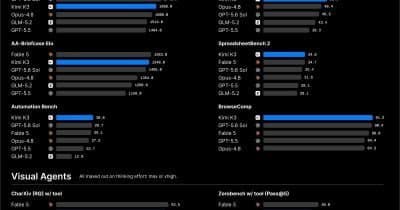
Kimi K3’s architecture, based on Mixture-of-Experts, activates only relevant model segments per task instead of all parameters simultaneously. This design boosts efficiency while maintaining high performance. Moonshot’s benchmarks place Kimi K3 just behind OpenAI’s Claude Fable 5 and GPT-5.6 Sol, highlighting its competitiveness.
One standout feature is Kimi K3’s 1 million token context window, enabling it to process very large documents, codebases, or research papers in a single operation. CEO Yang Zhilin considers this capability a key step toward artificial general intelligence.
Price Disruption and Market Implications
At about $3 per million input tokens and $15 per million output tokens, Kimi K3 undercuts US competitors like OpenAI and Anthropic by a significant margin. This pricing challenges established players to justify their higher fees or face margin compression.
Moonshot’s plan to open-source Kimi K3 fully by late July 2026 opens new doors for decentralized AI projects, especially in crypto. Protocols building inference marketplaces, AI agents, or compute networks will gain access to a powerful, low-cost model, potentially accelerating innovation in these sectors.
Strategic Resilience Under Constraints
Launching a frontier AI model within three years is notable given US export restrictions on advanced GPUs, which limit Chinese companies’ access to top-tier hardware. Moonshot’s success under these conditions draws parallels to earlier breakthroughs like the DeepSeek project earlier this year.
The geopolitical dimension cannot be ignored, as China’s advance pressures the US to reconsider its technological dominance in AI, with broad implications for innovation, investment, and regulatory dynamics worldwide.
This article is for informational purposes and does not constitute financial advice.