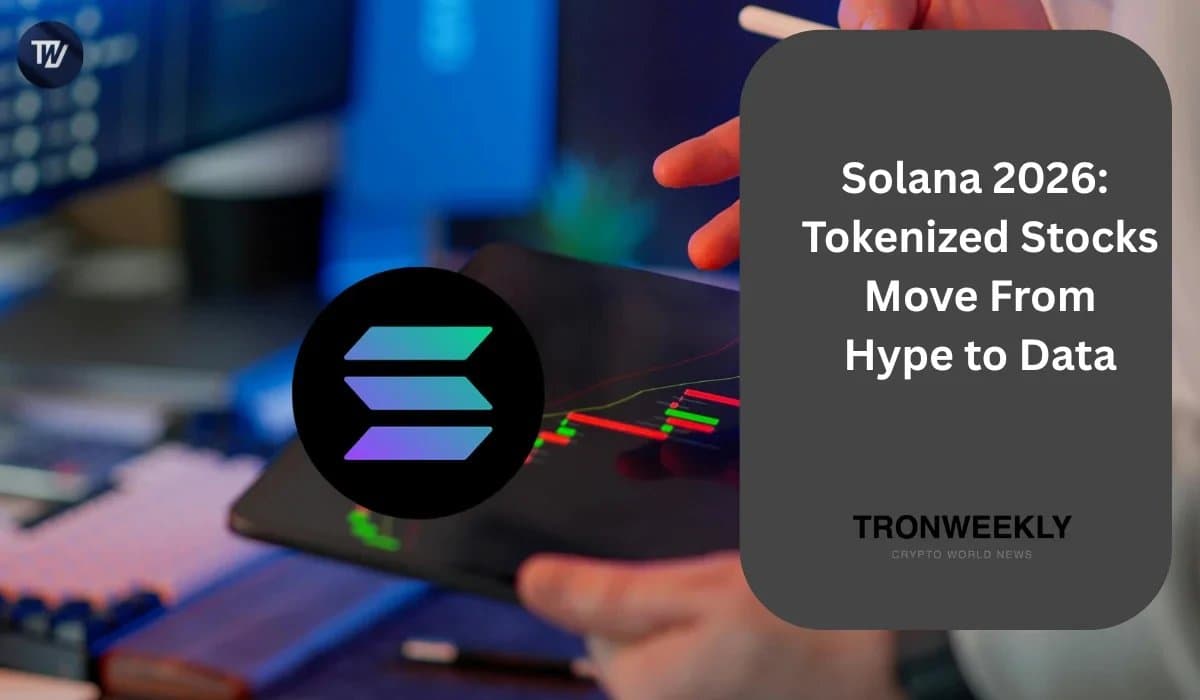
Tokenized stocks once felt experimental, yet Solana is transforming them into tangible on-chain metrics, making the blockchain a unique hub for real-world equity activity. This shift is more than a technical upgrade: it signals a deeper transparency in how tokenized assets are tracked and compared across competing networks.
Solana’s newly launched platform enables users to search, filter, and benchmark their market share against other blockchains, a feature absent in most crypto marketplaces. Investors and institutions can now study tokenized equities by company, underlying asset, and issuer, empowered by visual tools such as horizontal bar charts, doughnut charts, and line graphs. This goes far beyond mere Total Value Locked (TVL) numbers and opens a window into issuer growth and ecosystem development.
The ability to track real-world assets on-chain aligns with the growing demand for digitized, paperless representations of physical securities. Instead of fragmented data points, market participants gain a unified view of tokenized equity issuance and liquidity across different protocols. For funds, exchanges, and developers, this reduces information asymmetry and provides benchmarks to evaluate custody models and distribution strategies, making it easier to navigate a complex and evolving landscape.
Regulators in the US and EU, who have been intensifying focus on disclosure for digital securities, may find these detailed datasets invaluable for assessing market integrity and potential systemic risks. The availability of such data could influence regulatory approaches, providing a factual basis to monitor tokenized markets more effectively.
Solana’s advancement occurs amid stiff competition from Ethereum, Base, and other Layer 2 solutions expanding their Real World Asset offerings. However, Solana’s emphasis on detailed issuer and asset-level analytics suggests a maturation of the space away from hype toward compliance and technical sophistication. Future success will likely depend on how well these platforms integrate standardized data feeds and collaborate with broker-dealers to meet regulatory requirements and settlement needs.
This material is informational and not financial advice.