IREN’s recent disclosure that its AI cloud revenue will surpass $4 billion reshapes perceptions of what mining-focused firms can achieve. The announcement came with $2.8 billion in new multi-year cloud service contracts, sending IREN’s shares up 15.7% in one day. This jump reflects investor recognition that IREN’s business model is evolving beyond traditional Bitcoin mining toward serving AI development needs.
Revenue Shift Signals Market Realignment
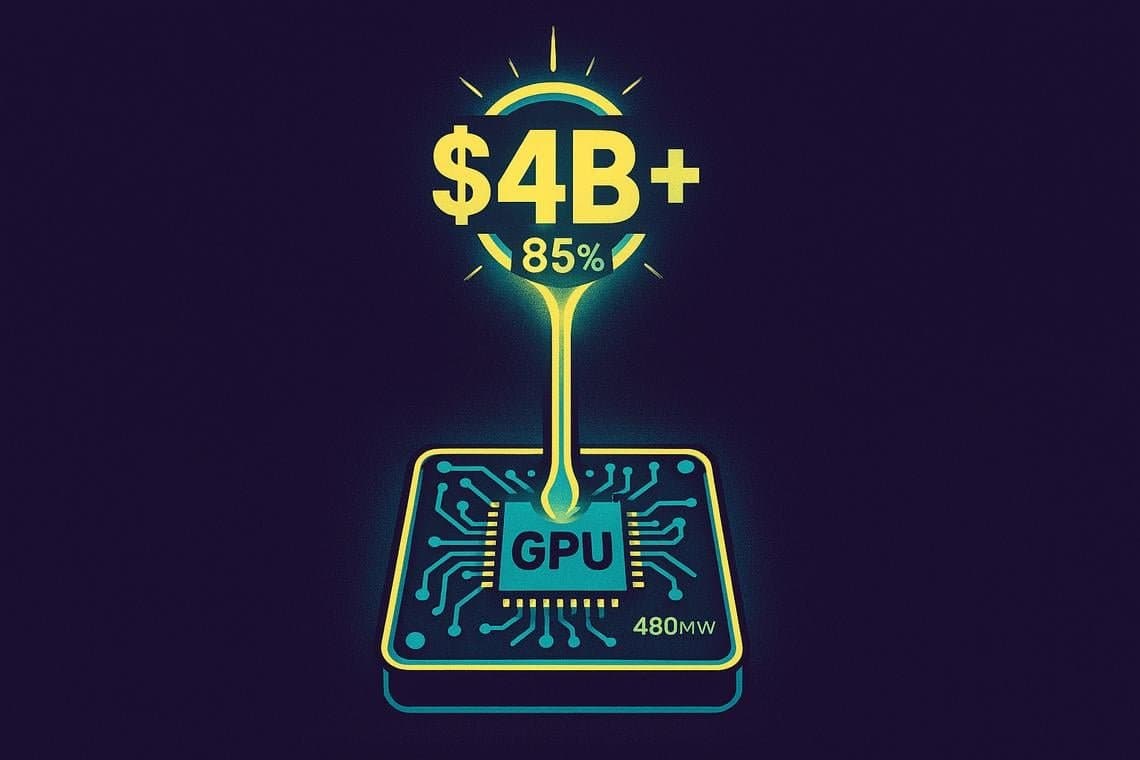
Before this announcement, IREN was primarily viewed as a player in the cryptocurrency mining sector. Now, with 85% of the revised $4 billion revenue target already secured through contracts, the company demonstrates strong traction in the AI infrastructure domain. Clients like Microsoft, Nvidia, Perplexity, and Figure AI signify high-profile, large-scale commitments. These partnerships indicate IREN’s ability to provide enterprise-grade computing power demanded by the AI sector, which is growing rapidly and seeking reliable cloud capacity.
The planned scale-up is dramatic: AI cloud capacity will expand from around 3 megawatts in 2025 to 480 megawatts by 2026, aiming for 1.2 gigawatts by 2027. about 45% of the GPU capital expenditure is funded through customer prepayments, mitigating financial risk and enabling accelerated growth without heavy dependence on external funding. This structure may encourage other mining companies to explore pivoting or diversifying into AI infrastructure.
The market response includes spillover benefits for related assets. The CoinShares Bitcoin Mining ETF (WGMI), where IREN constitutes the fourth-largest holding at 10.05%, rose 9.61% following the news. This sector-wide uplift suggests investors are starting to value Bitcoin mining firms as potential AI infrastructure providers rather than purely commodity-driven operations.
IREN’s upgrade comes amid broader shifts where crypto-related companies reassess growth trajectories in response to the AI boom, similar to transformations seen in tokenization strategies, as outlined in previous analyses. The development also spotlights a trend where traditional mining infrastructure is repurposed for high-demand computational tasks, a pivot that could alter capital allocation and operational priorities in the industry.
This article is informational and not financial advice.