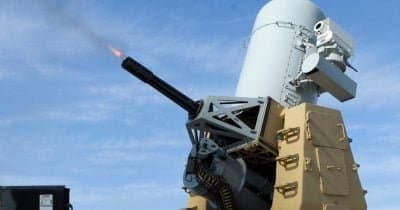
At least one active C-RAM battery opened fire over Erbil on July 22, 2026, intercepting Iranian drones in what U.S. defense observers are calling the most tactically visible Iran-linked engagement in northern Iraq in months. The Counter Rocket, Artillery, and Mortar system, originally developed to protect forward operating bases in Iraq and Afghanistan, uses a 20mm Phalanx cannon to destroy incoming projectiles at close range. Seeing it deployed against drone swarms over a Kurdish regional capital is a different order of magnitude from the skirmishes that have defined this conflict for years.
Why Erbil, and Why Now
Erbil hosts the U.S. consulate, a significant CIA logistics hub, and the Combined Joint Task Force headquarters for northern Iraq. It has been targeted before: a January 2024 ballistic missile strike by Iran hit near those facilities, killing contractors and wounding U.S. personnel. But drone engagements intercepted by C-RAM, rather than Patriot or THAAD, signal a shift in the attack profile. Drones are cheaper, harder to attribute cleanly, and can be launched in volume without triggering the same escalation calculus as a ballistic missile. Iran or its affiliated groups appear to be probing what volume of low-cost munitions U.S. defenses can absorb before the political cost of response rises.
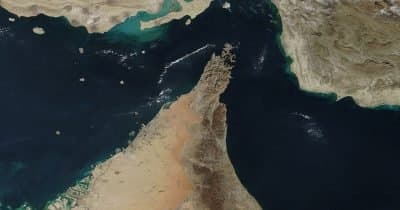
The backdrop matters here. Active drone-and-missile exchanges have been running across the region for weeks, and Iran's posture around the Strait of Hormuz has already begun moving energy and crypto markets. The Erbil intercepts add a northern Iraqi dimension to a conflict arc that now stretches from the Red Sea through the Gulf to Kurdistan.
What Prediction Markets Are Pricing In
Market data cited in the original reporting shows a measurable uptick in the implied probability of Iranian military action against a Gulf state. That is the number traders and analysts should watch, not the intercept itself. C-RAM activations are tactical events. A sustained increase in Gulf-strike probability on prediction markets is a strategic signal, because it reflects aggregated bets from participants with real money at stake, including some with regional intelligence exposure.
Key leadership figures under scrutiny include Iranian Supreme Leader Ali Khamenei and President Ebrahim Raisi on one side, and Gulf principals Mohammed bin Salman of Saudi Arabia and Mohammed bin Zayed Al Nahyan of the UAE on the other. Qatari and Omani back-channels, which have historically served as pressure-relief valves in U.S.-Iran standoffs, are reportedly active but have not produced any public signal of progress. Until one of those channels produces a verifiable pause, the default assumption for markets should be continued tactical escalation.
The Investor Calculus
Sustained drone pressure on U.S. facilities in Iraq historically correlates with short-term oil price spikes and a rotation into defensive assets. Bitcoin has shown a more ambiguous relationship with Middle East risk: it sold off sharply during the April 2024 Iranian missile barrage on Israel, then recovered within 72 hours as traders re-framed it as a geopolitical hedge. The current situation, with C-RAM intercepts in Erbil and Hormuz closure threats already in the price, may compress that recovery window if escalation broadens to Gulf infrastructure.
The vulnerability of U.S. facilities in Erbil despite years of hardening is the detail that should give investors pause. If a forward base with Patriot coverage nearby still requires last-ditch C-RAM activation, the tactical margin is thinner than official statements typically suggest. That gap between stated readiness and revealed operational stress tends to be where market surprises originate.
This article is for informational purposes only and does not constitute financial or investment advice. Always conduct your own research before making any financial decisions.