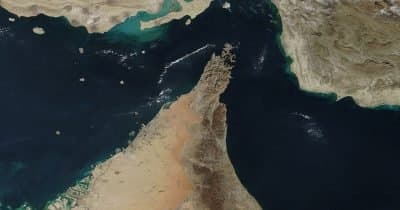
Arab oil producers are accelerating plans to route crude exports around the Strait of Hormuz, pushing forward pipeline infrastructure that could fundamentally alter how Middle Eastern energy reaches global markets. The push, reported by Middle East Eye, centers on two major projects already in various stages of operation: Saudi Arabia's East-West Pipeline and the UAE's Habshan-Fujairah corridor, also known as the Abu Dhabi Crude Oil Pipeline.
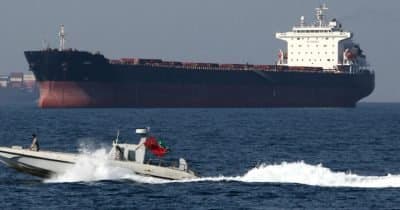
The logic is straightforward. The Strait of Hormuz is the world's single most consequential oil transit point, and its vulnerability has never been more visible. Iran's recent pattern of tanker seizures has reminded traders and governments alike that a corridor barely 33 kilometers wide at its narrowest point sits under constant geopolitical pressure. Any closure, even a temporary one, sends shockwaves through benchmark prices within hours.
Why Bypassing Hormuz Changes the Calculus
The Strait handles roughly 20% of global oil and LNG shipments. That single figure explains why insurance premiums spike on any regional escalation and why futures desks in London and Houston watch Iranian naval movements as closely as inventory data. Pipelines that carry crude overland to Red Sea or Gulf of Oman terminals sidestep that exposure entirely. Saudi Arabia's East-West line already has capacity to move significant volumes to Yanbu on the Red Sea coast, while the UAE's Fujairah terminal gives Abu Dhabi a direct outlet to the Indian Ocean, bypassing the Strait altogether.
The geopolitical timing matters. Talks around a potential Iran deal remain complicated by competing pressures in Washington, and the $95 billion House budget package has made a 2026 agreement look increasingly unlikely. With diplomatic resolution off the table for now, physical infrastructure becomes the hedge of last resort for Gulf producers who cannot afford to have export routes held hostage to political cycles they do not control.
Prediction market participants are already pricing in the implications. Activity around WTI Crude Oil price targets for July 2026 has picked up noticeably, with YES scenarios for higher price levels gaining ground. The reasoning cuts both ways: more secure export routes reduce the catastrophic-disruption premium that has historically been baked into crude during Hormuz flare-ups, but they also signal that Gulf producers are serious about sustaining output volumes regardless of what happens at the Strait. More reliable supply access tends to support steady pricing rather than the sharp spikes that come with chokepoint anxiety.
What traders are watching now is operational status. Pipelines announced or partially built are not the same as pipelines flowing at full capacity. Any concrete update on throughput figures, completion timelines, or offtake agreements from Fujairah or Yanbu will land in the market as real information, not just strategic signaling.
This article is for informational purposes only and does not constitute financial or investment advice.