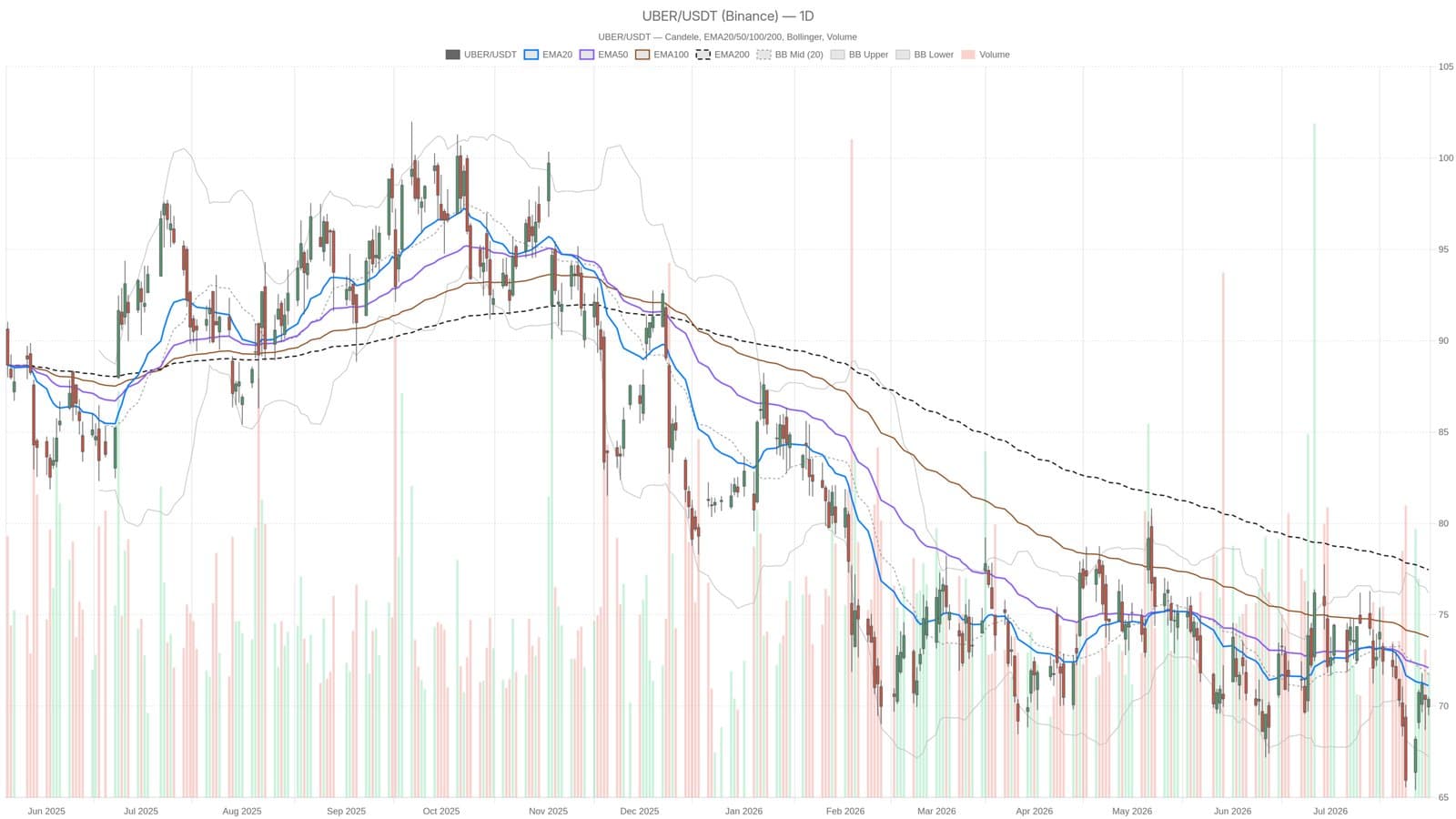
Crypto exchanges are reshaping their business models by offering perpetual futures that track traditional assets like stocks, indexes, and commodities. This shift comes with a staggering surge in trading volume, reaching $1.32 trillion in just the first five months of 2026, compared to $104 billion during the entire previous year.
Perpetual Futures Bring Wall Street Assets to Crypto Traders
Originally designed for digital currencies, perpetual futures (PERPS) now provide nonstop exposure to markets like the S&P 500 without the need to own the underlying shares or gain shareholder rights. These instruments appeal to institutions searching for frictionless trading options and retail investors eager for 24/7 access to traditional markets. Perpetual products let traders speculate on price movements at any hour, a novelty compared to regular stock exchanges with fixed trading sessions.
Gracy Chen, CEO of Bitget, highlights this transformation, saying her platform's volume has shifted dramatically. “Just a year ago, stock perpetuals didn’t even exist on our platform. Now, nearly 28% of our trading volume comes from stock-related perpetual futures.” This illustrates how crypto exchanges are expanding beyond their original niche and pulling in mainstream financial instruments.
Blurring Lines Between Crypto and Traditional Finance
Binance’s Shunyet Jan notes that traditional finance platforms are adopting crypto-originated innovations, including continuous trading hours and perpetual contracts. He suggests that these features, once exclusive to crypto, are migrating back to traditional markets. This bilateral flow challenges the old narrative that crypto simply imitates legacy finance.
Major exchanges like Coinbase and Binance are pushing to become “everything exchanges,” offering crypto, equities, and derivatives within single accounts. Some even allow using tokenized stock positions as collateral for crypto derivatives, further blending the two worlds. Still, many large institutional investors remain cautious about decentralized platforms, wary of regulatory and custody risks.
The growth of stock-linked perpetuals coincides with a broader trend where crypto and Wall Street increasingly intersect. About two years ago, Wall Street introduced crypto exposure via ETFs and custody products. Now, crypto venues are welcoming traditional finance assets, potentially changing how investors interact with markets.
This material is for informational purposes only and does not constitute financial advice.