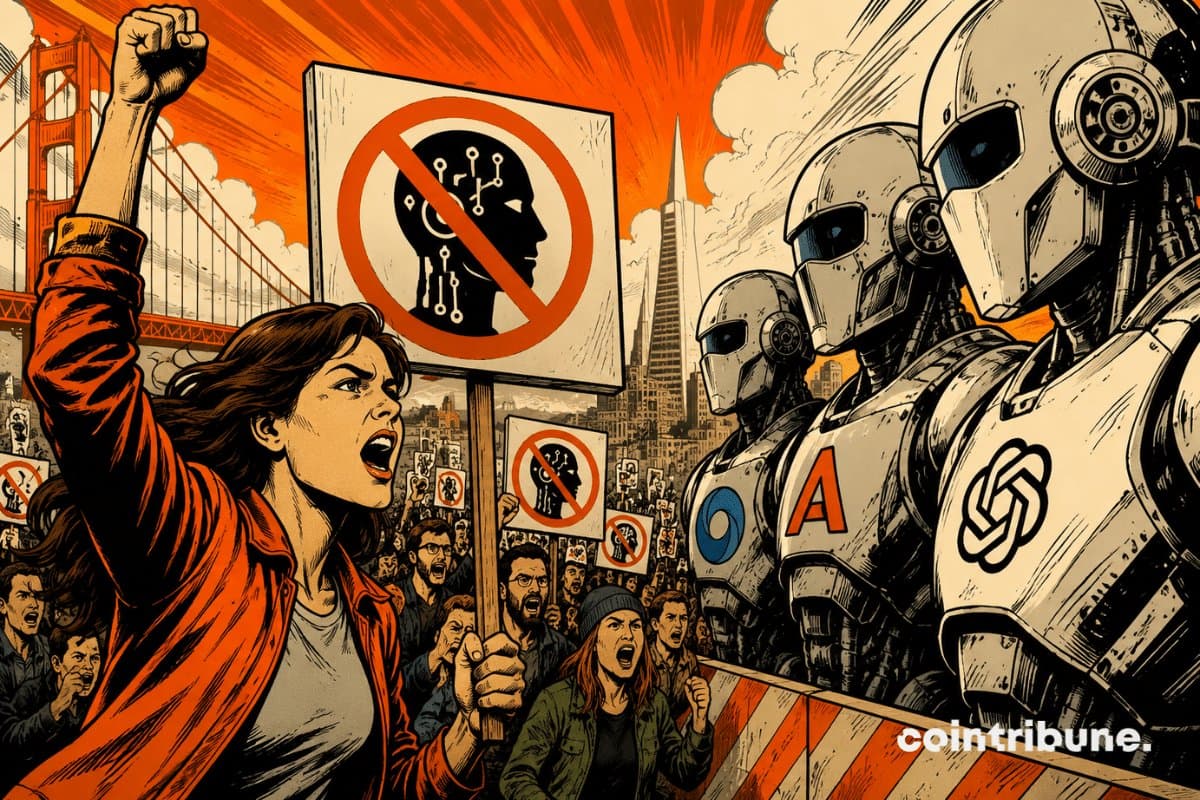
Approximately 200 protesters marched in San Francisco recently, calling for a halt to the advancement of leading artificial intelligence models created by companies such as OpenAI, Anthropic, and Google DeepMind. This demonstration was organized by the Stop the AI Race movement, which aims to address not only the security issues surrounding AI but also its broader social, economic, and environmental impacts.
The protest serves as a continuation of a previous mobilization in March, reflecting an evolving approach among activists. Initially focused on persuading tech CEOs directly, organizers have shifted their strategy, emphasizing the importance of public demonstrations to convey widespread concern about AI's rapid progression. Michaël Trazzi, the movement's coordinator and a former AI researcher, articulated this change, noting that the movement's objectives have broadened to encompass issues like job displacement and the environmental costs associated with AI infrastructure.
Protesters highlighted the need for stronger regulatory measures and oversight of AI systems, as fears mount over the influence of large tech firms on economic and political decisions. This growing discontent reflects a significant shift in public sentiment towards AI, where technical risks are now intertwined with deep-seated socio-economic anxieties.
The increasing visibility of such protests could potentially prompt tech companies to reconsider their development strategies and prioritize safety and ethical considerations in AI research. As discussions around the implications of advanced AI models continue to intensify, the demands articulated by these protesters may resonate more broadly across various sectors, influencing future policies and practices.
This article is for informational purposes only and should not be considered financial advice.