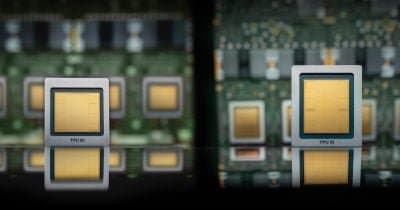
Alphabet's recent shift to sell its Tensor Processing Units (TPUs) directly to external data centers marks a significant pivot in the ongoing semiconductor competition, notably against Nvidia. This move indicates that Google is no longer just a provider of cloud services but is stepping firmly into hardware sales, a realm that could alter the competitive landscape.
On April 29, CEO Sundar Pichai revealed plans to ship 4.3 million TPUs in 2026, scaling up to over 35 million by 2028. The implications of these numbers are staggering; Morgan Stanley estimates that selling just 500,000 TPUs could generate around $13 billion in revenue for Google by 2027. Such projections reflect not only a robust demand for AI computing power but also Google’s confidence in the expanding market.
A noteworthy aspect of this strategy is Google's ability to target some of Nvidia's most lucrative clients. For instance, Anthropic, the AI lab behind the Claude model, is reportedly set to commit to deploying one million TPUs along with a significant investment in power infrastructure; Meta is also in talks regarding substantial TPU commitments. This aggressive push illustrates a clear intent to weaken Nvidia's dominance in the AI chip sector.
Shifting Market Dynamics
Historically, Google has kept its TPUs for internal use, optimizing its own applications such as Search and YouTube recommendations. The groundwork for external sales appears to have started back in 2022 when Google restructured to grant its Cloud division more control over TPU distribution. Now, Google is making a bold move by allowing customers to purchase these chips outright, rather than merely renting access through its Cloud services. This change signifies a transition from being a service provider to a hardware competitor.
Google joins other tech giants like Amazon and Microsoft, which have also developed their own chips, yet the scale and ambition behind Google's TPU production are noteworthy. By aiming to serve a growing market, it appears Google anticipates an increasing need for AI accelerators that cannot be met by any single vendor.
Consequences for the Tech Landscape
The potential disruption caused by Google's actions could extend beyond financial forecasts. The influx of TPUs into the market may enhance competition, driving innovation and possibly leading to improved technologies and reduced costs for consumers. As more players enter the AI chip arena, the traditional reliance on Nvidia could diminish, paving the way for a more diversified semiconductor ecosystem.
In summary, Google's aggressive TPU sales strategy not only aims to secure substantial revenue but also positions the company as a serious contender in the AI hardware market. This could shift the balance of power, prompting other firms to bolster their technological capabilities while ensuring that investors keep a keen eye on the evolving landscape.
This article is informational and does not constitute financial advice.