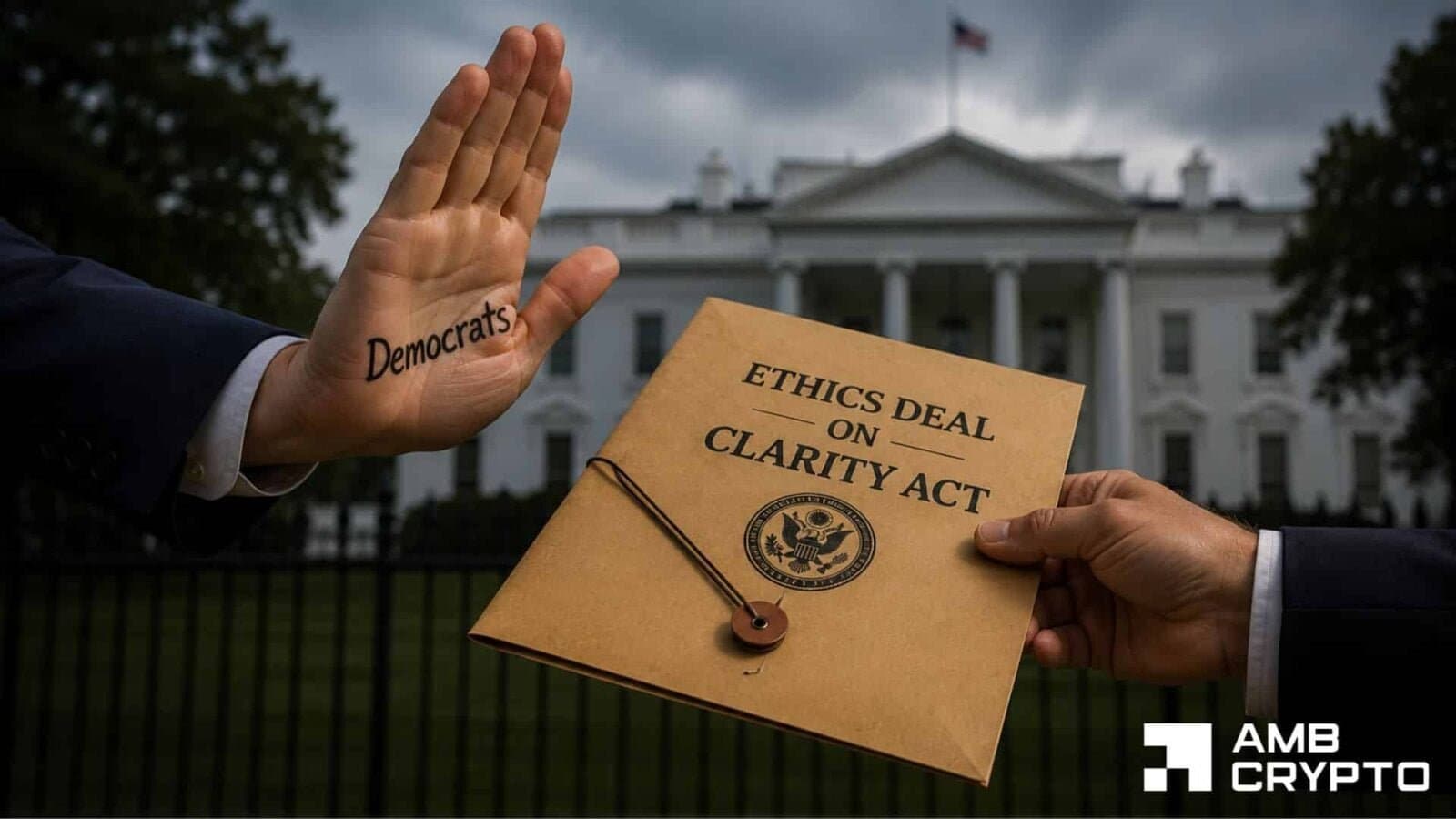
Democratic senators are sharply divided over the White House ethics agreement aimed at curbing self-dealing in the crypto industry by the president and senior officials. The deal assigns exclusive enforcement power to the Department of Justice (DoJ) for ethical violations, a move that clashes with Democrats’ initial demand to empower state attorneys general.
Internal Fractures in Democratic Support
Senator Angela Alsobrooks (D-MD), a key figure in the stablecoin yield compromise, labeled the ethics deal an ‘unserious offer’ and vowed to withhold support if the DoJ remains the sole enforcer. Similarly, Senator Ruben Gallego criticized the legislation as inadequate, emphasizing the need to secure more Democratic votes to reach the 60-vote Senate threshold. Alsobrooks and Gallego were the only Democrats who voted in favor during Committee markup, highlighting the tenuous nature of Democratic backing.
This division matters because Republicans require between seven and ten Democratic votes to pass the CLARITY Act on the Senate floor. The ongoing ethics dispute risks alienating key swing votes, potentially delaying or derailing the bill’s progress amid heightened scrutiny over government officials’ conflicts of interest.
Ethics Concerns Fuel Intra-Party Tensions
Beyond legislative mechanics, the ethics controversy is stirring intra-party conflict. Progressive activist groups publicly criticized Senator Kirsten Gillibrand, chair of the Democratic Senatorial Campaign Committee, for a perceived conflict of interest due to her son’s involvement in crypto. These allegations echo broader concerns about accountability and transparency within the Democratic leadership, complicating efforts to present a unified front on crypto regulation.
Despite these challenges, sentiment around the bill’s passage has improved recently. Prediction markets have raised the likelihood from 38% to 47% following the ethics negotiations update. Fundstrat’s Sean Farrell argues the actual probability may be higher, noting that insiders are restricted from trading on these platforms, which can dampen market signals.
This discord over enforcement authority and ethics oversight shows the complex balancing act lawmakers face: advancing crypto regulation while managing political optics and ensuring solid accountability. The outcome will significantly influence how crypto compliance and government integrity are enforced in the near term.
This article is informational and does not constitute financial advice.