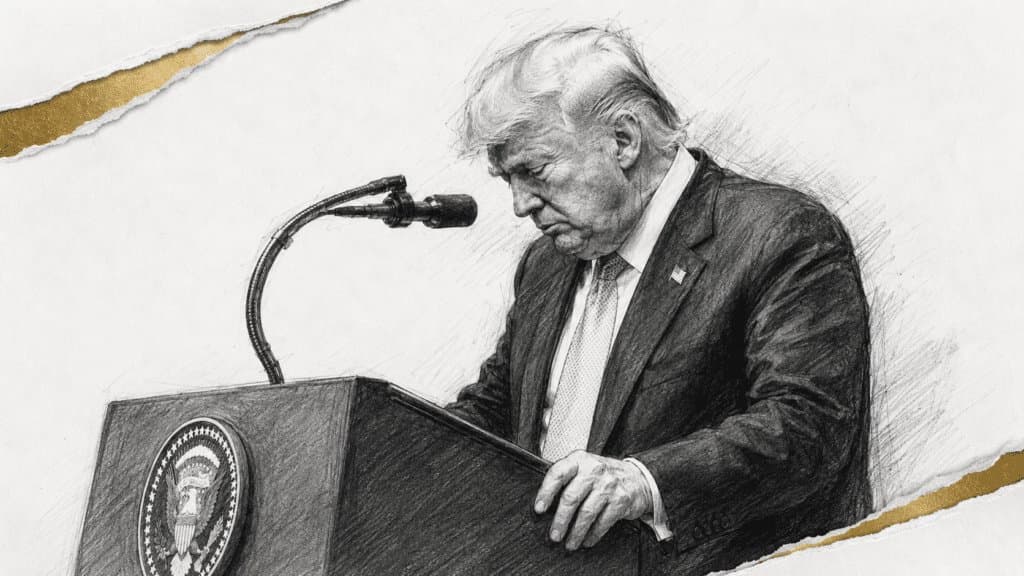
Former President Donald Trump has made a significant public appeal to the Senate, urging them to push forward the Digital Asset Market Clarity Act. This proposed legislation would clarify the regulatory landscape for cryptocurrencies in the United States, an area that has long been neglected and fraught with ambiguity.
At the heart of the Clarity Act is the delineation of authority between two major regulatory bodies, the Commodity Futures Trading Commission (CFTC) and the Securities and Exchange Commission (SEC). Such a separation is essential for establishing a coherent framework for how digital assets should be treated under U.S. law. The act has made progress in Senate committees, and its advancement to a full Senate vote marks a potential shift in U.S. crypto regulation.
Market analysts are closely watching the implications of this bill. Trump's backing may serve as a catalyst for reducing uncertainties that have plagued the crypto market, particularly for Bitcoin. Reflectively, the market seems to be pricing in the potential for increased Bitcoin valuation, anticipating that clearer regulations could lead to higher institutional investment a sentiment echoed in the ongoing discussions around the Clarity Act.
If passed, this legislation could usher in a new era of acceptance for cryptocurrencies, allowing larger investors to engage with the market with more confidence. Stakeholders keen on institutional adoption are particularly hopeful, as stable regulatory environments typically lead to increased investment from corporations and other significant institutional players.
Attention should be directed at how the Senate responds to Trump's call. A successful passage of the Clarity Act would not only represent a monumental change in regulatory policy but also likely impact market sentiment surrounding Bitcoin's future prices. As regulatory clarity emerges, market participants will be looking for signals of increased institutional engagement, which could further influence Bitcoin's trajectory.
This material is informational and not intended as financial advice.