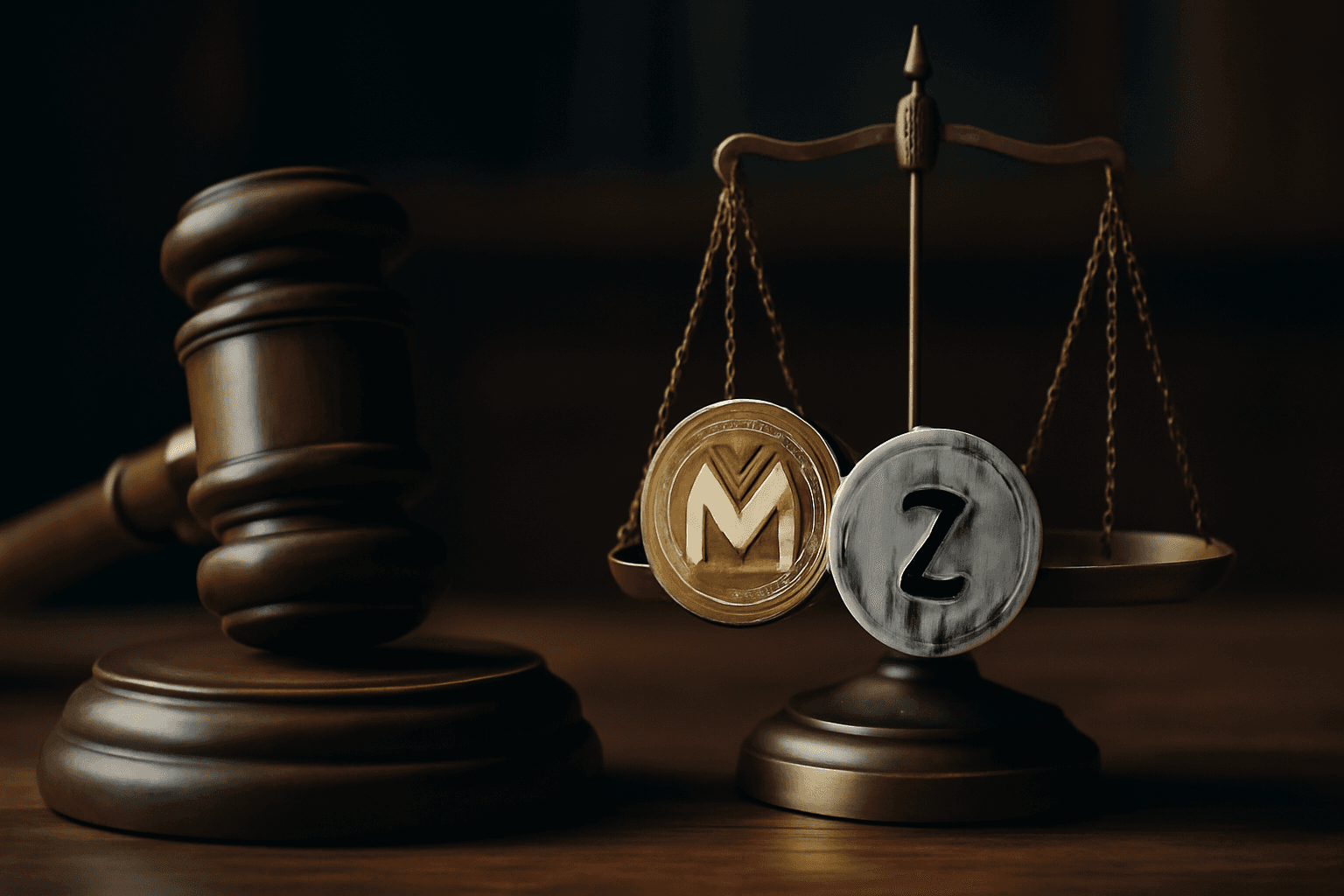
The recent downturn in the prices of privacy-focused cryptocurrencies Zcash and Monero has raised significant concerns among investors and analysts alike. This decline comes on the heels of a report from Chinese legal researchers identifying privacy coins and crypto mixers as potential tools for money laundering. The implications of this report could be far-reaching, particularly in a market that is already grappling with regulatory scrutiny.
The Role of Regulatory Concerns
Regulatory bodies worldwide have been increasingly vigilant regarding cryptocurrencies, particularly those that prioritize anonymity. The mention of Zcash and Monero in the Chinese report is not merely a passing observation; it signifies a potential crackdown on privacy coins in a country that has historically maintained strict control over its financial systems. Although the report did not introduce any new laws, the mere identification of these coins as money laundering indicators can lead to heightened enforcement actions.
Market Reaction and Investor Sentiment
As a direct consequence of these developments, both Zcash and Monero have seen their prices drop, with significant implications for investor sentiment. The market often reacts negatively to regulatory news, and this situation is no exception. Investors may fear a tightening of regulations that could limit the use of these coins, leading to a sell-off. In the current climate, where market confidence is already brittle, such regulatory signals can exacerbate price declines and trigger broader market instability.
Potential Consequences for Privacy Coins
The future of Zcash and Monero now hangs in a delicate balance. Should the Chinese government decide to enforce stricter regulations against privacy coins, it could set a precedent for other countries to follow suit. This may lead to a substantial decrease in the market for privacy coins, compelling them to adapt or face potential obsolescence in a market increasingly driven by compliance and transparency.
Moreover, the ripple effects of this regulatory scrutiny could extend to other cryptocurrencies, particularly those perceived as risky by regulators. Investors should keep a close eye on developments in this space, as the landscape for privacy coins is likely to evolve rapidly in response to these regulatory pressures.
This article is for informational purposes only and should not be considered financial advice.