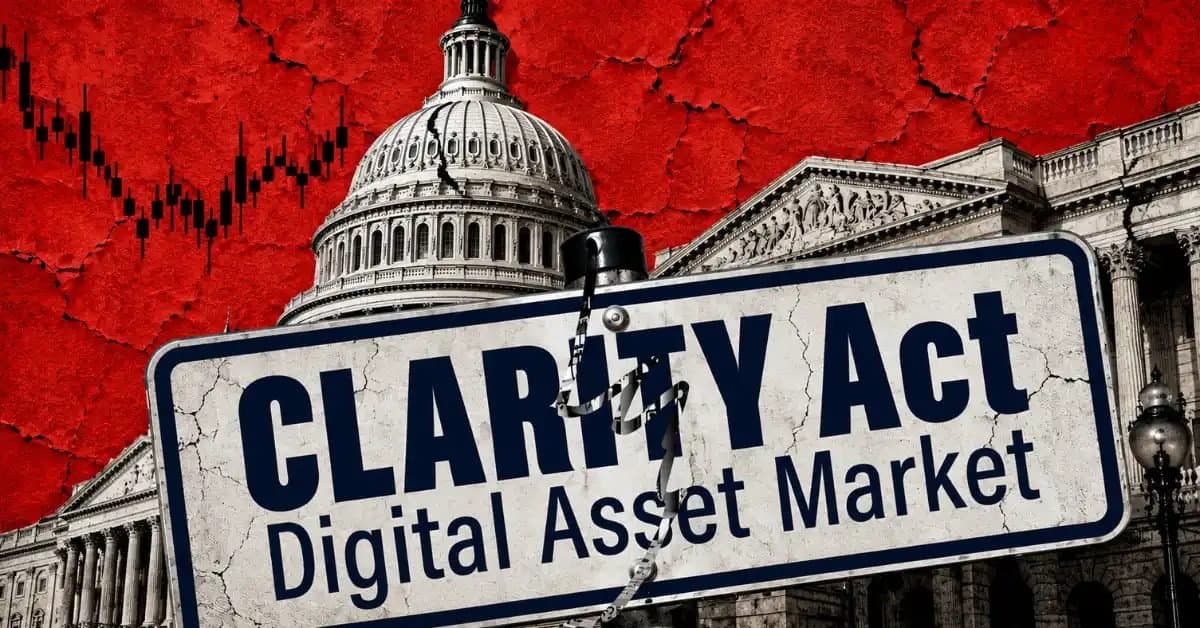
Amid a backdrop of increasing scrutiny over cryptocurrency regulation in the U.S., President Donald Trump's upcoming meeting with senators to discuss the CLARITY Act may signal a key moment for the industry. The CLARITY Act aims to establish a comprehensive framework for digital assets and could significantly alter the space for crypto operations within the country.
Timing and Legislative Pressure
Scheduled for Thursday, this meeting involves key legislators including Senators Bernie Moreno, Cynthia Lummis, and others who are keen on advancing the bill before the august congressional recess. The urgency behind this initiative is palpable; with discussions surrounding the regulation of cryptocurrencies heating up, the timing of this meeting could influence both the Senate's agenda and the broader market sentiment.
Passing the CLARITY Act could provide much-needed clarity for businesses navigating the complex regulatory environment. The prevailing uncertainty has often driven firms to consider relocating operations abroad, where regulatory frameworks might be more favorable. A successful push for this act could not only stabilize the U.S. crypto market but also enhance its competitiveness on a global scale.
Possible Outcomes for Investors
The implications of this legislation stretch far beyond just regulatory clarity. Should the CLARITY Act pass, investors might see a more structured investment environment that encourages institutional participation. With a solid legal framework, companies could feel more secure in their operations, potentially leading to increased innovation and investment in the sector. This is particularly crucial given the volatile nature of cryptocurrency markets and the historical challenges posed by regulatory ambiguity.
Conversely, failure to gain traction for the CLARITY Act could signal ongoing instability for the cryptocurrency market, leading to heightened speculation and risk aversion among investors. In such a scenario, firms may continue to face challenges in securing funding and attracting talent, which could stifle growth and innovation.
This article is for informational purposes only and should not be considered financial advice.