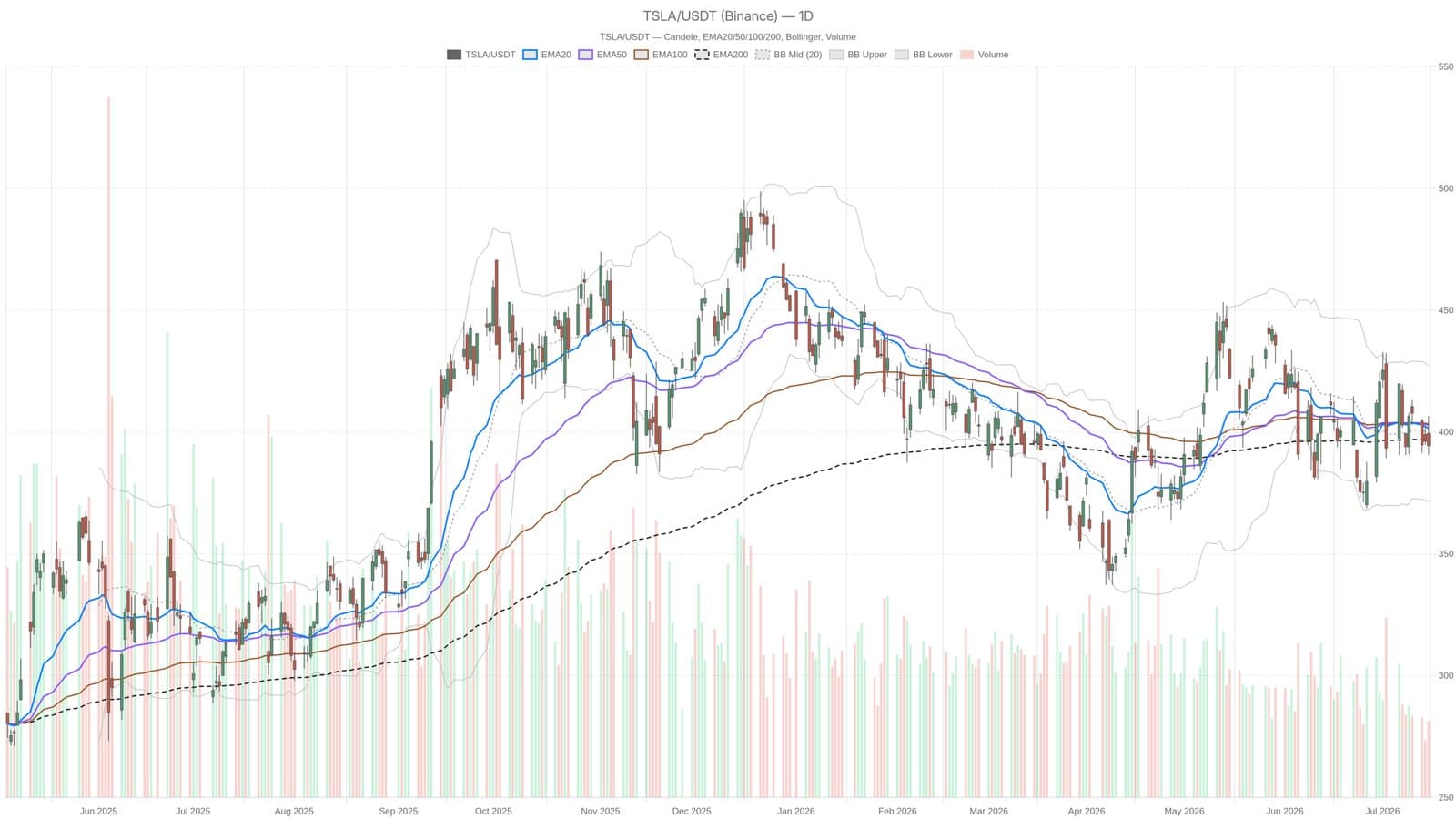
On July 15, Tesla's stock closed at $394.46, marking a significant drop below its key moving averages, the EMA20 and EMA50, which stand at $401.53 and $402.81 respectively. This decline signals a notable shift in market sentiment, leaning towards bearish as sellers appear to gain an upper hand. The upcoming Q2 earnings report presents a critical point for the company but is shadowed by diverging analyst opinions on whether record-breaking deliveries can justify the current stock valuation.
Despite achieving impressive delivery numbers, several analysts raise flags concerning potential downside risks. Wells Fargo has set an ambitious target price at $130 for Tesla, indicating a staggering 67% potential decline, while Jefferies has even opted for Amazon as a preferred pick among the top Magnificent 7 stocks. This reflects a growing sentiment of skepticism amid discussions around lower average selling prices, escalating capital expenditures related to AI, and the risk of negative free cash flow, major concerns that could overshadow the optimistic delivery figures.
In terms of technical indicators, Tesla's daily RSI has settled at 47.14, accompanied by a negative MACD, further confirming the lack of buying momentum. Volatility is another critical aspect influencing trader sentiments, with a daily average true range (ATR) of $18.88 suggesting that swift movements in either direction are to be expected as earnings reports approach. Historical trends reveal that Tesla's stock is accustomed to large price swings of nearly $19, which makes positioning around earnings particularly precarious.
As for market behavior, the daily pivot analysis demonstrates resistance at $403.81 and support at $387.88. The recent price action, where it hit a high of $406.59 before coming back down, indicates active seller participation at elevated levels. The current trading atmosphere calls for a cautious approach from investors as these interim factors weigh heavily on Tesla's near-term outlook.
This material is informational and should not be viewed as financial advice.