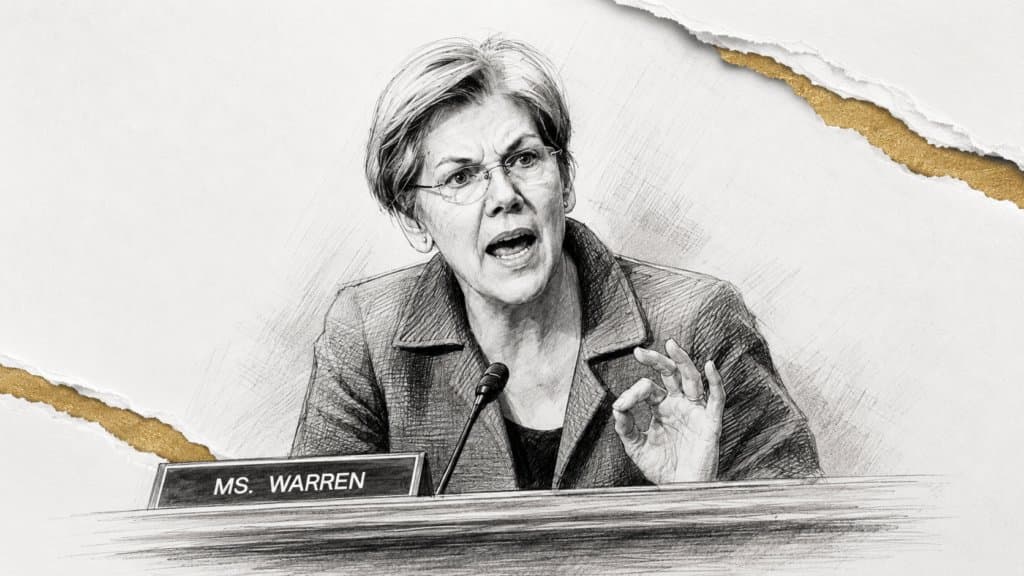
The recent revelation of President Donald Trump's substantial cryptocurrency earnings, totaling approximately $1.4 billion during the first year of his second term, has ignited a renewed call for congressional hearings by five prominent Senate Democrats. Senators Elizabeth Warren, Richard Blumenthal, Gary Peters, Dick Durbin, and Ron Wyden, all holding key committee positions, are raising concerns over potential conflicts of interest that could undermine regulatory integrity in the cryptocurrency sector.
The lawmakers' joint statement indicates that the financial disclosures highlight the involvement of unknown third parties in Trump’s crypto ventures, particularly pointing to a significant stake purchased by a UAE royal in World Liberty Financial, the Trump family's crypto enterprise. This intersection of politics and finance not only raises ethical questions but also reinforces the ongoing scrutiny surrounding Trump's influence on cryptocurrency legislation, considering his advocacy for industry-friendly measures while profiting from them.
Earlier this year, these senators were vocal in demanding investigations into a reported $500 million investment from the UAE, demonstrating a pattern of concern regarding Trump's financial interests aligning with his political actions. The latest disclosures show that Trump has garnered considerable royalties from his memecoin, along with substantial revenues from token sales and stablecoin ventures linked to influential foreign financiers.
With the cryptocurrency industry at a pivotal moment, particularly with the stalled CLARITY Act aimed at establishing a more structured regulatory framework, the timing of these revelations is critical. Lawmakers fear that Trump’s financial ties to the crypto sector could hinder objective policymaking, especially in light of his administration's moves to reduce oversight, such as disbanding the National Cryptocurrency Enforcement Team.
The implications of these developments extend beyond personal finance; they place the regulatory future of the cryptocurrency landscape at risk. Heightened scrutiny from Congress could lead to more rigorous oversight and potentially reshape how crypto assets are governed moving forward. As the industry grapples with these regulatory challenges, stakeholders are left to ponder what this means for the future of cryptocurrency in the U.S. and its impact on global markets.
This article is for informational purposes only and does not constitute financial advice.