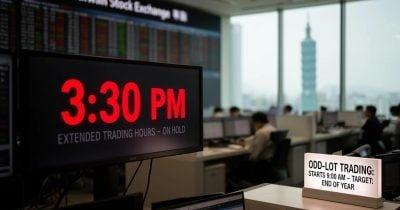
The recent exodus of foreign capital from emerging market equities, totaling $46 billion just in June, has raised significant concerns about the health of these markets. South Korea and Taiwan emerged as the primary contributors to this unprecedented withdrawal, together accounting for nearly half of the MSCI Emerging Markets Index weight.
In June, foreign investors sold off $27.08 billion worth of Asian equities, with South Korea suffering $12.63 billion in outflows and Taiwan around $8 billion. This sell-off was so severe that South Korea’s KOSPI index activated circuit breakers amidst volatility that saw declines exceeding 8%. Such dramatic market movements compel investors to closely examine the drivers behind these trends.
Understanding the Root Causes
The current withdrawal can largely be attributed to three critical factors. First, both South Korea and Taiwan are integral players in the global AI supply chain; with Taiwan leading in semiconductors and South Korea in memory chip production. These markets initially attracted investors seeking exposure to AI without needing to invest in overpriced U.S. tech stocks. However, as sentiment shifted and investors began to rotate out of 'crowded' positions in AI, this led to a sharp sell-off.
Second, increasing oil prices have placed additional stress on both economies, which are significant net energy importers. High crude costs not only squeeze corporate profit margins but also exert pressure on current account balances. This economic vulnerability makes these markets less appealing to foreign investors looking for stability.
Lastly, political uncertainty in South Korea has fueled a pattern of capital flight throughout 2026. The nation has been undergoing significant turmoil which has instigated consistent selling by foreign investors.
The Crypto Connection
Interestingly, amidst the turmoil in the equity markets, domestic crypto trading volumes in South Korea surged during the same sessions that triggered KOSPI circuit breakers. While no direct causal link has been established, many market observers are speculating that retail investors may be diverting their capital into crypto markets as an alternative venue for risk, particularly when equities are volatile. South Korea is home to one of the most active retail crypto environments globally, and this trend mirrors behavior observed during past market downturns, such as in 2022.
As these dynamics unfold, investors need to consider the broader implications. The significant outflows from Asian equities could prompt a reassessment of risk tolerance, not just in South Korea and Taiwan but across the entire emerging market landscape. Additionally, as the crypto market gains traction amid traditional market volatility, it could signify a shift in investor behavior and asset allocation strategies.
This article serves to inform and does not constitute financial advice.