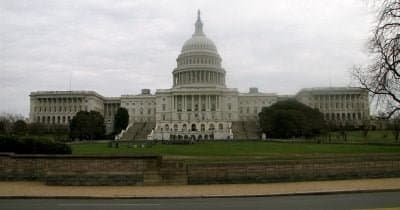
US regulators have missed the July 18, 2026 deadline set by the GENIUS Act to finalize stablecoin regulations, leaving the sector in regulatory limbo. Despite a full year since the law's enactment and coordinated efforts by the Federal Reserve, OCC, FDIC, NCUA, and Treasury, no binding rules have been established.
Regulatory Inaction Despite Clear Mandates
The GENIUS Act, signed by President Trump on July 18, 2025, aimed to impose a federal framework on payment stablecoins, including mandates for 1:1 reserve backing in US dollars or safe equivalents, licensing for issuers, AML compliance, and transparency through public disclosures. Instead of final rules, agencies issued advance notices and solicitations for comments, which hold no legal power, effectively signaling indecision or complex internal deliberations.
This absence of finalized regulations undermines the Act’s original goal to provide clear guidance and certainty for stablecoin issuers, many of whom now rely on informal regulatory signals rather than transparent, published frameworks. The lack of penalties for missing the deadline reveals a structural weakness in enforcement mechanisms, meaning agencies face no immediate consequences for delay.
Implications for Market Participants and Compliance
The uncertainty persists heading into the January 18, 2027 implementation date, which depends on either that day or 120 days after final regulations are issued. If regulators continue to postpone rules until late 2026 or 2027, the stablecoin market will effectively function without standardized federal oversight for a prolonged period. This scenario complicates compliance for issuers and investors alike, potentially increasing operational risks and limiting the industry’s ability to scale under a clear and uniform regulatory umbrella.
Market participants might also experience uneven enforcement and reliance on unofficial communications, which could favor larger entities with access to regulatory insiders, creating an uneven playing field that undermines the Act’s fairness goals.
In a broader context, this delay contrasts with other geopolitical pressures impacting crypto markets, such as tensions influencing trading patterns and strategic moves by major players, underscoring the growing gap between market evolution and regulatory responses.
material is for informational purposes only and does not constitute financial advice