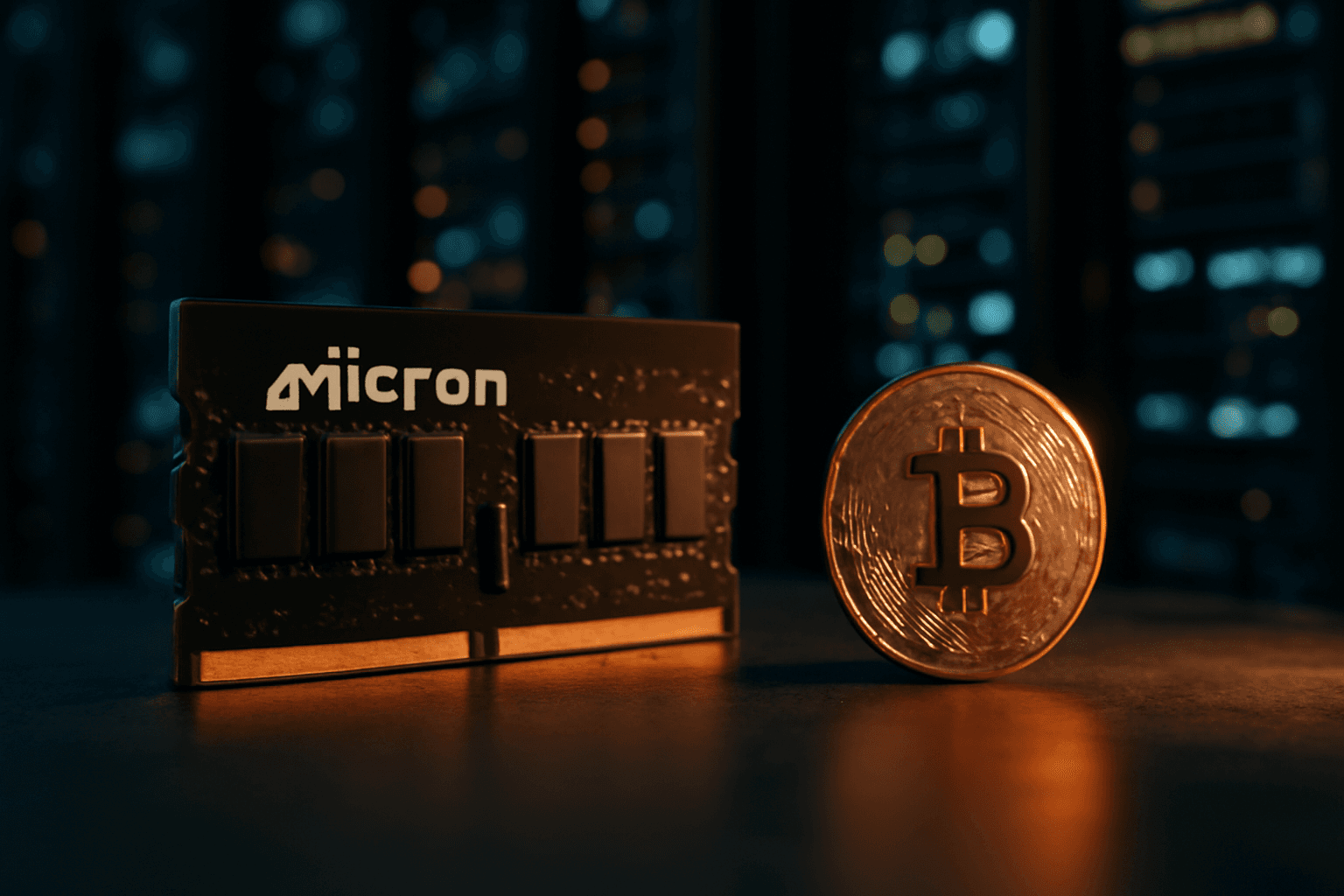
The recent announcement of Micron Technology achieving an impressive 87% gross margin in its data center business during fiscal Q3 2026 underscores the burgeoning demand for AI-related memory solutions. Micron's financial performance not only highlights its dominance in a key segment of the tech industry but also draws attention to potential implications for the crypto sector, particularly regarding infrastructure costs that depend heavily on advanced memory technologies.
Significance of Micron's Record Margins
This extraordinary margin growth, representing a 12 percentage-point increase from the previous quarter, signals more than just a strong demand for high-performance memory; it reflects Micron's strategic positioning within a market experiencing structural discrepancies between supply and demand. With annualized revenues from its Compute and Data Center Unit projected to exceed $100 billion, Micron is now competing among the giants of technology.
- Micron's data center unit achieved a gross margin of 87%, a remarkable performance for any hardware sector.
- Quarterly revenue for the unit surpassed $25 billion.
- Micron has secured 16 customer agreements backed by approximately $22 billion in cash deposits.
This dominance is vital since it indicates a shift toward increased pricing power in a sector that has traditionally been competitive, suggesting a new era where memory providers can dictate terms based on high demand and limited supply.
The Ripple Effects on Crypto Infrastructure
As Micron’s margins balloon due to the constraints affecting high-bandwidth memory (HBM) availability, the ramifications are beginning to influence crypto infrastructure costs significantly. Notably, operations reliant on compute-heavy processes, such as Ethereum scaling solutions, may face increased expenditure as the memory supply crunch persists. The challenge for crypto projects will be managing these costs while maintaining performance standards.
Furthermore, price increases for memory components could squeeze profit margins across the crypto industry, which may already be under financial stress due to market fluctuations. This could lead to a restructuring of business strategies and possibly a consolidation within the sector.
Looking Ahead: Key Considerations for Investors
As we move forward, stakeholders in both the tech and crypto markets should remain vigilant regarding several factors:
- Monitor how Micron's pricing power could reshape the competitive landscape in both sectors.
- Watch for announcements regarding strategic partnerships or additional customer agreements from Micron, which may further solidify its market position.
- Stay aware of broader economic conditions that could impact supply chains for semiconductor manufacturing.
In conclusion, Micron’s success is more than a financial anomaly; it represents a pivotal moment in the interplay between traditional technology growth and the evolving demands of the cryptocurrency sector. Investors should prepare for potential shifts in costs and strategies as these dynamics unfold.
This material is for informational purposes only and is not financial advice.