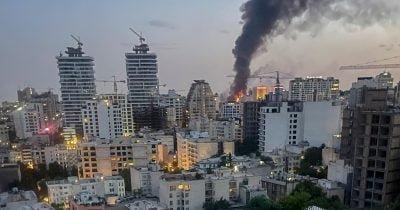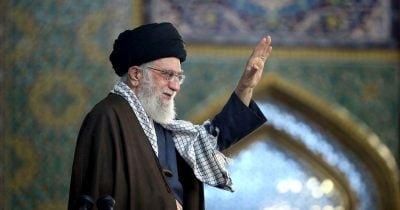
The recent passing of Iran's Supreme Leader, Ali Khamenei, marks a pivotal moment for the country, raising critical questions about its political stability amidst a backdrop of military conflict and leadership transitions. The grand state funeral, which attracted an impressive turnout across major cities in both Iran and Iraq, was more than a tribute; it served as a strategic attempt by the regime to assert its hold over the nation and demonstrate resilience against external pressures, particularly from the West.
Khamenei's death, a direct result of a U.S.-Israeli airstrike, has significantly altered the dynamics within Iran's leadership. His son, Mojtaba Khamenei, has stepped into the role of Supreme Leader, but his limited public presence due to injuries raises concerns about the continuity and stability of the leadership. This uncertainty has already begun to reflect in market perceptions, with pricing mechanisms indicating a slight increase in the probability of Iran lacking a stable head of state by the close of 2026, rising from 3% to 3.6% in just 24 hours.
The importance of the funeral processions cannot be overstated; they appear designed to reinforce a narrative of strength and control within the government, countering fears of fragmentation or dissent. Observers are keenly monitoring any forthcoming public appearances by Mojtaba Khamenei, as such events could either bolster or further undermine perceptions regarding the new leadership's legitimacy. The Assembly of Experts may play a crucial role in determining the future direction of Iran's governance, particularly if they endorse Mojtaba’s rule or fail to do so amid signs of internal dissent.
As the region's geopolitical tensions remain high, particularly with ongoing military hostilities, the internal dynamics of Iran's leadership will be under intense scrutiny. Any indications of power struggles or instability could lead to significant implications for market movements, possibly triggering a reassessment among investors regarding the risks of engaging with Iranian assets or aligning with its political future. Observers should remain vigilant, as the landscape is fluid, and even minor developments can shift the market's sentiment dramatically.
This material is informational and should not be considered financial advice.