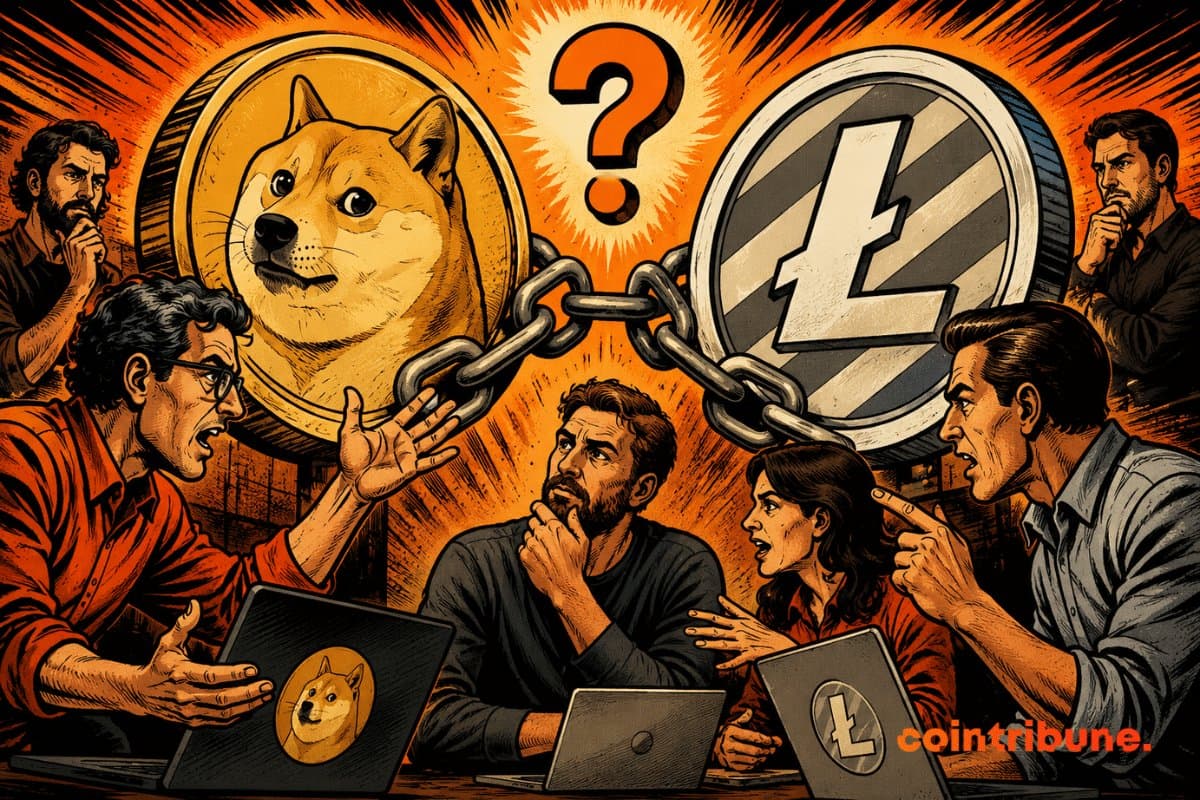
Dogecoin’s security model sparks renewed debate as its mining dependence on Litecoin and other Scrypt coins comes under scrutiny. With merged mining at its core, Dogecoin leverages a shared hashrate ecosystem to secure its blockchain, raising questions about autonomy and risk concentration.
Reevaluating Dogecoin’s Security Dependency
On July 18, 2026, developer Paulo Vidal challenged the status quo by highlighting Dogecoin’s lack of independent mining and its reliance on Litecoin’s network security. Both cryptocurrencies share the Scrypt proof-of-work algorithm, and merged mining allows Dogecoin to piggyback on Litecoin’s computational power. The implication is straightforward: Dogecoin’s resilience against 51% attacks is closely linked to Litecoin’s mining strength. A lower Litecoin hashrate could theoretically weaken Dogecoin’s defense, exposing it to higher attack risks. This debate touches the fundamental nature of security for proof-of-work blockchains, where raw hashrate directly correlates with attack costs and network robustness.
Shared Mining Ecosystem Versus Independence
Countering Vidal, crypto developer Chromatic X emphasized that Dogecoin’s security is not tethered to Litecoin alone but rather to the entire array of Scrypt-based cryptocurrencies practicing merged mining. This ecosystem approach dilutes the risk of dependency on a single project. According to Chromatic X, while complete autonomy in mining might align with ideological purity, the current merged mining framework provides sufficient security. The shared hashrate reduces operational costs for miners while maintaining a solid defense against 51% attacks. It also means any disruption in one Scrypt chain impacts others, for better or worse, embedding Dogecoin within a collective security model rather than isolating it.
Implications for Miners and Investors
Co-founder Billy Markus reaffirmed Dogecoin’s status as the most profitable Scrypt coin to mine, underscoring ongoing miner interest and network vitality. Meanwhile, the Dogecoin Foundation pointed to an inverse dependency, hinting that Litecoin might benefit just as much from merged mining. This symbiotic relationship suggests that changes in Litecoin’s mining landscape or incentives can ripple through Dogecoin’s ecosystem, affecting miners’ strategies and, subsequently, network security. For investors, understanding this intertwined security model is vital. It affects Dogecoin’s risk profile, especially amid shifting miner economics or if Litecoin’s hashrate declines. Merged mining thus acts both as a security amplifier and a potential systemic vulnerability.
This material is informational and does not constitute financial advice.