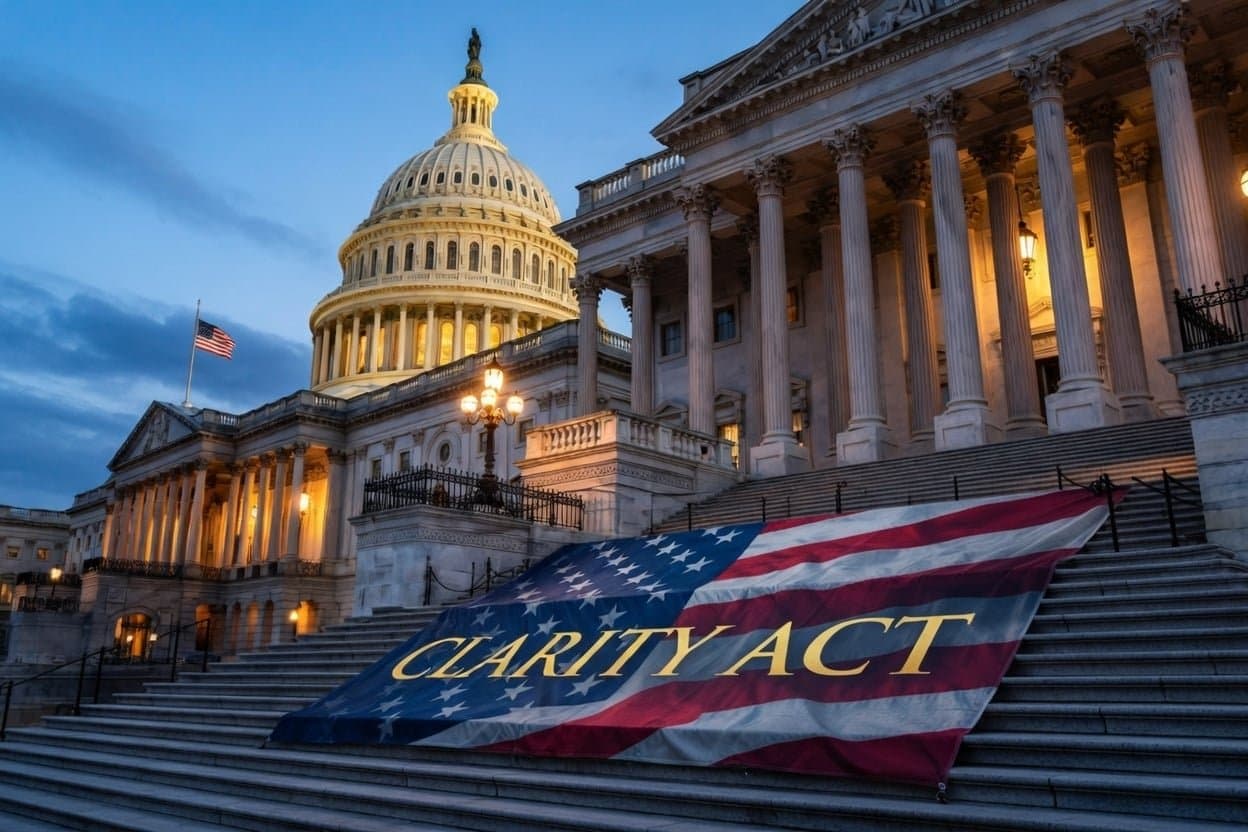
The White House has secured consensus on an ethics package tied to the Clarity Act, signaling a key shift in legislative negotiations. Language reflecting this agreement has already been sent to select Senate Republicans, indicating movement on a bill stalled over conflict-of-interest concerns.
The Clarity Act aims to overhaul digital asset regulation, having passed the House and cleared the Senate Banking Committee but then stuck without a Senate floor vote. This ethics deal addresses one of the main obstacles that blocked progress and raises the chance of achieving the 60 votes needed to overcome a filibuster.
Currently, the Clarity Act remains on the Senate Legislative Calendar, awaiting cloture. The confirmed agreement on ethical provisions may pave the way for floor debates and eventual voting.
Market participants have responded with modestly increased odds that the Clarity Act will become law by the end of 2026, reflecting optimism that the path through the Senate is clearing.
Watch for official statements from White House officials or Republican Senate leaders to confirm the deal. Comments from Senate Majority Leader Chuck Schumer or former President Trump could sway market sentiment further.
Upcoming Senate sessions will be critical as any scheduled votes or renewed discussions on the Clarity Act could confirm a likely affirmative outcome.
This development fits into a broader regulatory landscape affecting digital assets, similar to shifts seen in other policy areas such as US-Iran geopolitical tensions influencing compliance risks in crypto markets.
Material is informational and not financial advice.