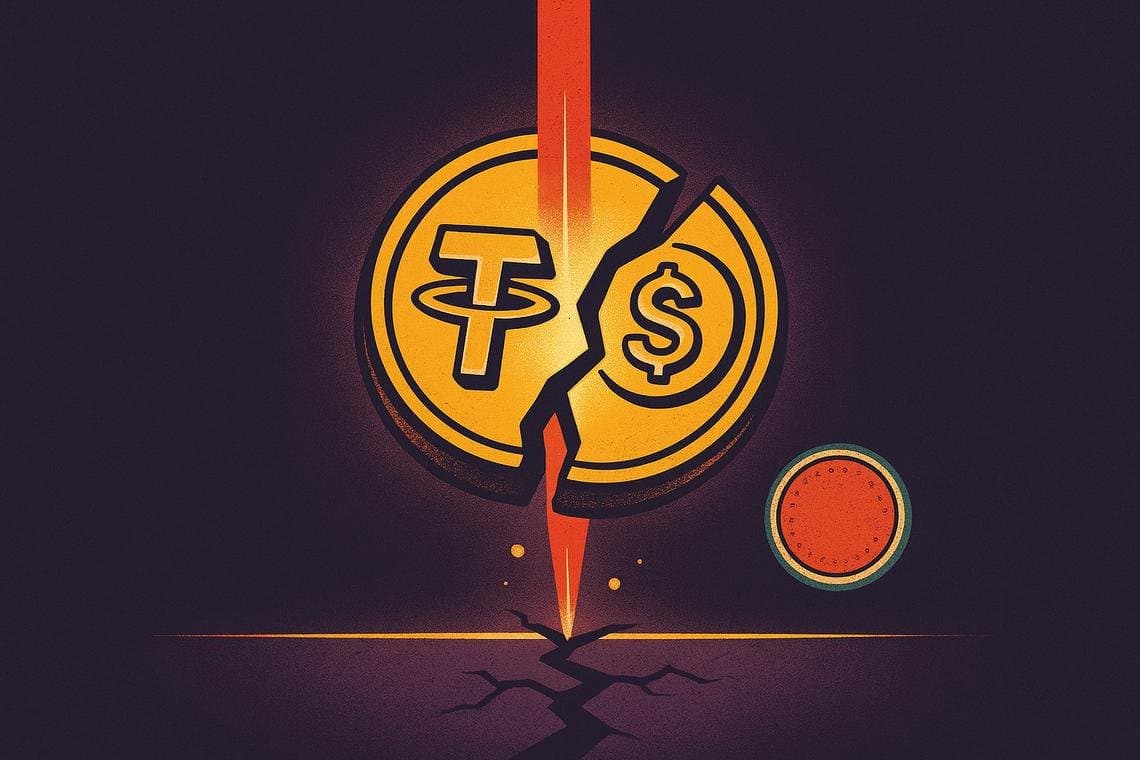
The recent decline in the stablecoin market, which has seen approximately $10 billion evaporate since May 2026, raises significant questions about the liquidity landscape in the cryptocurrency sector. Data from RWA.xyz reveals that a staggering $7.7 billion of this sum was lost in June alone. While this drop appears alarming, it is crucial to contextualize it within the broader market trends. This contraction, albeit the sharpest since 2023, represents a mere 3% decrease in total market capitalization, particularly when compared to the catastrophic 26% collapse seen during the crypto winter of 2022.
Tether's USDT market cap has notably shrunk from $190 billion to around $184 billion, while Circle's USDC has decreased from nearly $80 billion in March to approximately $73 billion today. Together, these two stablecoins account for a large portion of the overall market retreat. The simultaneous pullback of both USDT and USDC is particularly concerning given that the total market had stabilized around $300 billion since October 2025, after a significant growth period.
Historical context is vital here. The 2022 bear market, catalyzed by events such as the TerraUSD collapse and the failures of major players like FTX, saw the stablecoin market cap plummet from approximately $166 billion to $122 billion, a staggering 26% decline. Tether alone saw its market cap fall from $78 billion to $65 billion during that tumultuous period. USDC experienced an even more dramatic decline, plummeting from $55 billion to below $24 billion by late 2023. In contrast, today’s 3% decrease seems less catastrophic, even if it still signals a troubling trend in the market.
Interestingly, amidst this overall decline, smaller stablecoins like USDG and USDGO have managed to grow, indicating that investors may be seeking alternatives amid the turbulence. Furthermore, Circle's recent acquisition of an OCC trust bank charter allows it to manage USDC reserves directly, reflecting a structural shift that may bolster regulatory confidence in major issuers. This development could potentially stabilize the market in the long run.
In conclusion, while the recent $10 billion decline in the stablecoin market may initially seem alarming, it is essential to recognize it within the context of prior market volatility. The current contraction, while significant, is not nearly as severe as past downturns. Nevertheless, the simultaneous pullback of the leading stablecoins could hint at deeper liquidity issues, warranting close attention from investors and market participants alike. This article is for informational purposes only and does not constitute financial advice.