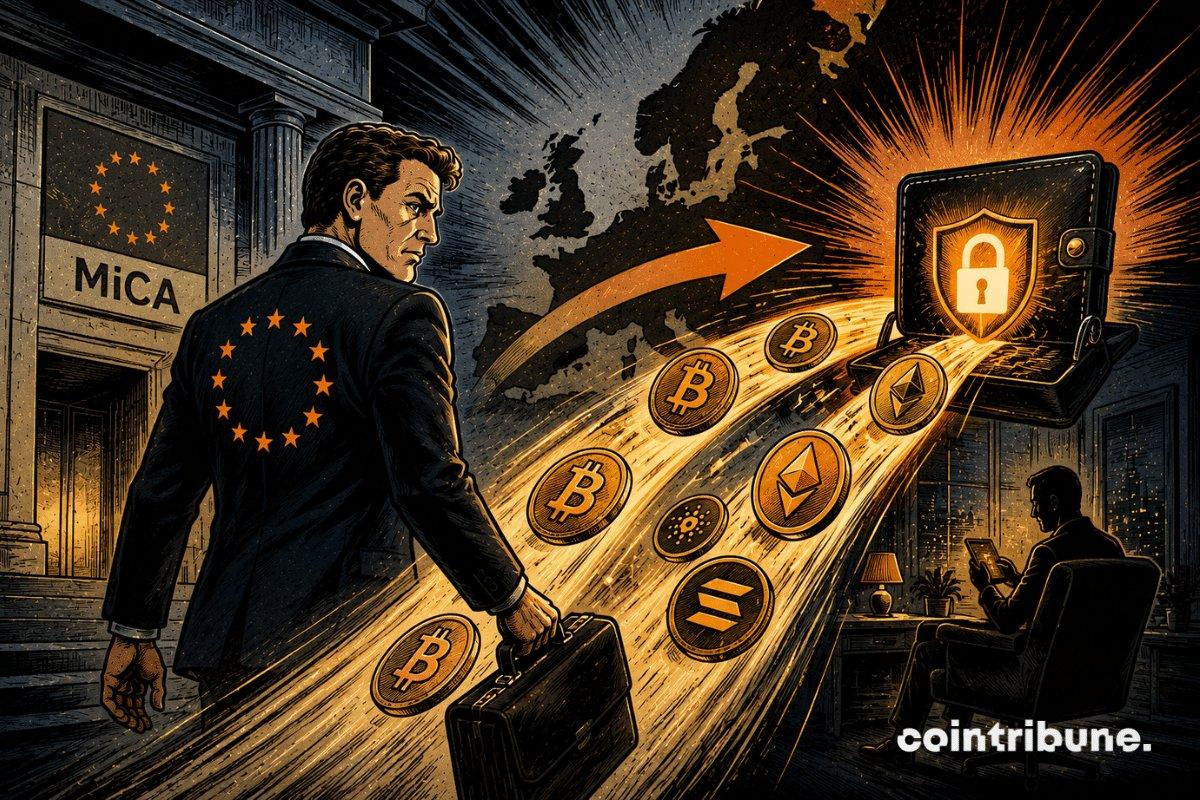
The recent data revealing that 70% of withdrawals from Binance have been directed towards self-custody wallets, rather than MiCA-regulated platforms, highlights a crucial shift in user behavior amidst evolving regulatory frameworks. This trend signals a growing resistance among users towards centralized exchanges and the increasing appeal of decentralized finance solutions.
After Binance faced operational restrictions in Europe, the significant migration of funds into private wallets raises critical questions about the effectiveness of the new European Union financial regulations established under MiCA. By migrating to self-custody wallets, users are opting for greater autonomy over their funds, effectively evading Know Your Customer (KYC) and anti-money laundering (AML) measures that usually apply to centralized entities. While this move may provide users with more control, it paradoxically amplifies their exposure to risks, as noted by Binance co-CEO Richard Teng.
This result is a direct consequence of Binance's recent decision to withdraw its MiCA license application in Greece, a choice that was influenced by administrative delays and political pressures. The firm's strategy reflects a protective stance towards its clients, opting against a disruptive transition period that could have compromised user safety and asset security. However, this decision, paired with the ongoing geopolitical landscape, underscores a significant tension between regulatory oversight and user-driven financial autonomy.
Binance is not alone in navigating this complex environment; its strategic pivot towards enhanced operations in Asia-Pacific and its substantial user base of 323 million worldwide illustrate its attempt to maintain relevance in a highly competitive market. The increasing shift toward self-custody may lead to long-term implications for the crypto ecosystem, influencing how platforms structure their services and engage with regulatory bodies.
As this trend unfolds, market participants must consider the broader implications of regulatory actions on user behavior. The evident flight of capital from centralized exchanges to self-custodial options could fundamentally reshape the dynamics of the crypto market, potentially prompting regulators to reassess their approach and adapt to the evolving landscape. The question remains: will MiCA and similar regulations succeed in their intended goals, or will they only drive users further away from centralized services?
This content is for informational purposes only and should not be considered financial advice.