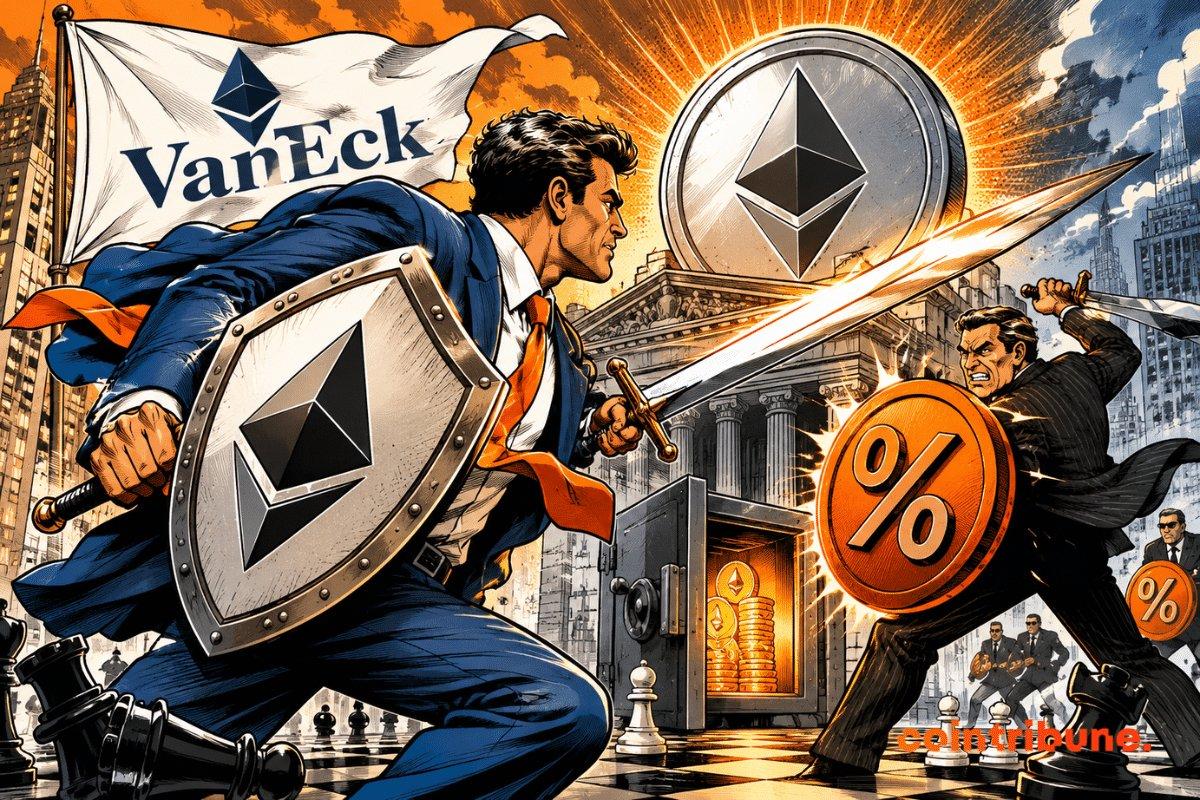
The competitive landscape for cryptocurrency-related investment products is witnessing a significant transformation, particularly in the realm of Exchange-Traded Funds (ETFs) linked to Ethereum. VanEck's recent modification of its spot Ethereum ETF registration documents underscores a trend where asset managers are increasingly focused on reducing fees to attract initial capital. This strategic shift is crucial, as it indicates a maturation in the market where competition hinges not merely on regulatory approvals but on specific financial metrics that resonate with investors.
Context of the Fee Battle
The landscape for Ethereum ETFs has evolved from one characterized by a race for regulatory approval to a nuanced competition where fee structures are paramount. The recent updates from VanEck introduce a fee waiver structure, aiming to make its product more appealing in a market where multiple funds offer similar exposure to the same underlying asset. This change comes at a time when investor scrutiny is intensifying, as they carefully assess the financial implications of various offerings. Investors are more likely to compare these products based on fees, which can significantly impact their returns.
Implications for Investors and Asset Managers
As investors delve deeper into the details of ETF offerings, regulatory adjustments have become key indicators of asset managers' strategies. The fee waiver strategy utilized by VanEck is not just a marketing gimmick; it is a calculated move designed to draw attention in a crowded marketplace. When performance expectations are relatively aligned among various funds, even minor differences in fees can sway investor decisions. This dynamic underscores the importance of cost transparency and the need for asset managers to remain flexible and responsive to market conditions.
Furthermore, the competition among Ethereum ETF issuers signifies a broader shift in investor behavior. The emphasis on fees may lead to a more informed and discerning investor base, which is beneficial for the overall market. A focus on cost-efficiency can also encourage asset managers to enhance their offerings, ultimately providing better products for investors.
Looking Ahead: The Future of Ethereum ETFs
As the competition intensifies, the implications for Ethereum as an asset class are profound. The focus on fee structures suggests that the market is entering a phase where investor choice will play a crucial role in determining which funds succeed. The potential for capital flows to be influenced by cost structures indicates that asset managers must continuously innovate to maintain a competitive edge. The evolving landscape of Ethereum ETFs may lead to increased liquidity and investor participation in the cryptocurrency market, reshaping the dynamics of digital asset investments.
This material is informational and does not constitute financial advice.