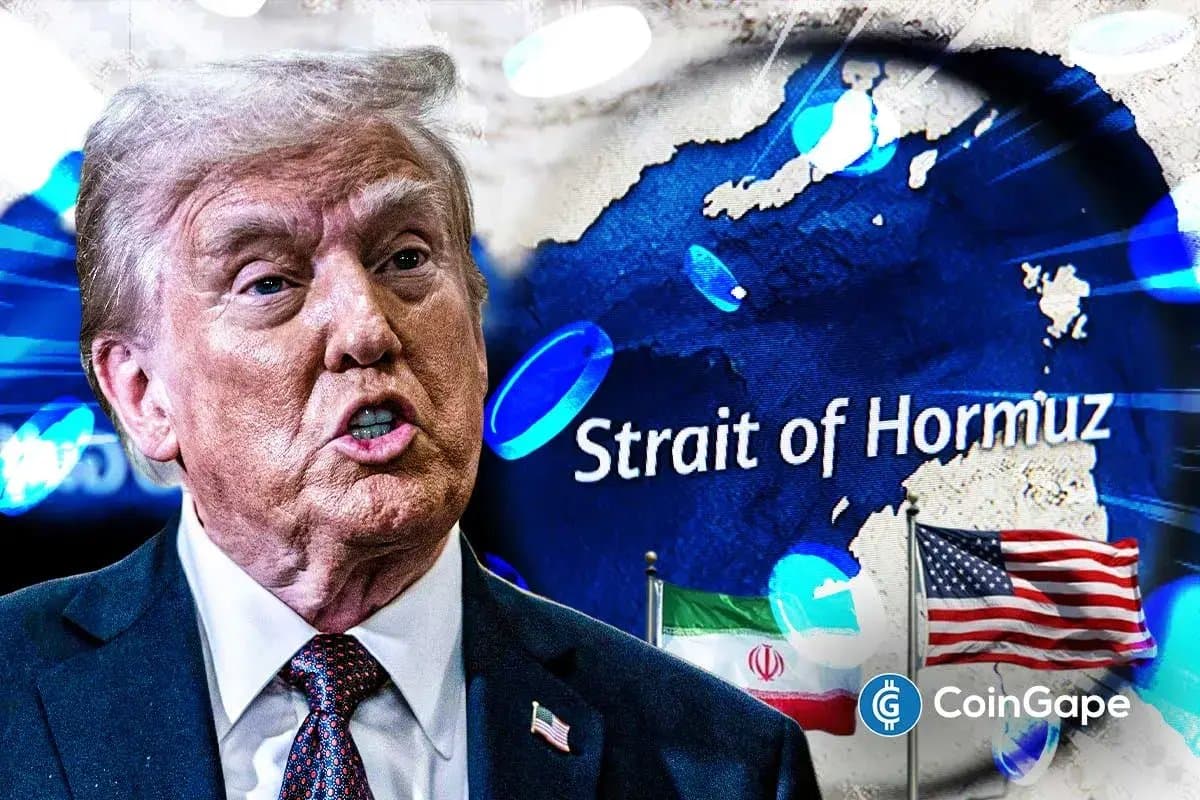
Bitcoin crossed $64,500 on the back of fresh signals from Donald Trump about resolving Middle East tensions. The president said a reopening of the Strait of Hormuz could happen "very soon," comments that rippled across markets as traders weighed the geopolitical risks finally easing off the table.
The Strait of Hormuz blockade has sat as a low-grade threat to global oil flows for months. About 21 million barrels of crude pass through it daily, making any disruption a direct hit to energy prices and, by extension, risk appetite across crypto and equities. When Trump signaled the corridor could reopen imminently, it amounted to permission for markets to price in stability again.
Relief rally spreads across digital assets
Ethereum jumped 2.11% to $1,920, while smaller altcoins caught the wave too. Solana, XRP, and Dogecoin all gained ground, each climbing between 1% and 3% within hours of the announcement. BNB held steady near $572. The moves weren't dramatic in absolute terms, but they reflected a shift in market psychology, one where geopolitical risk premiums started coming out of prices. When traders stop pricing in worst-case scenarios, liquidity flows back into riskier assets first.
Oil markets reacted faster. A potential reopening of a choked-off trade route doesn't just matter for energy stocks or commodities funds. It matters for the broader macro backdrop that influences whether institutions rotate into crypto or stick with cash. Lower oil prices ease inflation narratives, which in turn makes central banks less aggressive on rates. That's the chain that runs from the Strait to your Bitcoin holdings.
Trump's timeline remains vague, naturally. "Very soon" could mean days or weeks. But the statement alone was enough to shift sentiment. Markets don't wait for certainty; they trade on probability. And right now, the probability of de-escalation in the Middle East just moved measurably higher.
This is informational content and should not be construed as financial or investment advice. Geopolitical developments affect markets in complex ways, and past price movements do not guarantee future results.