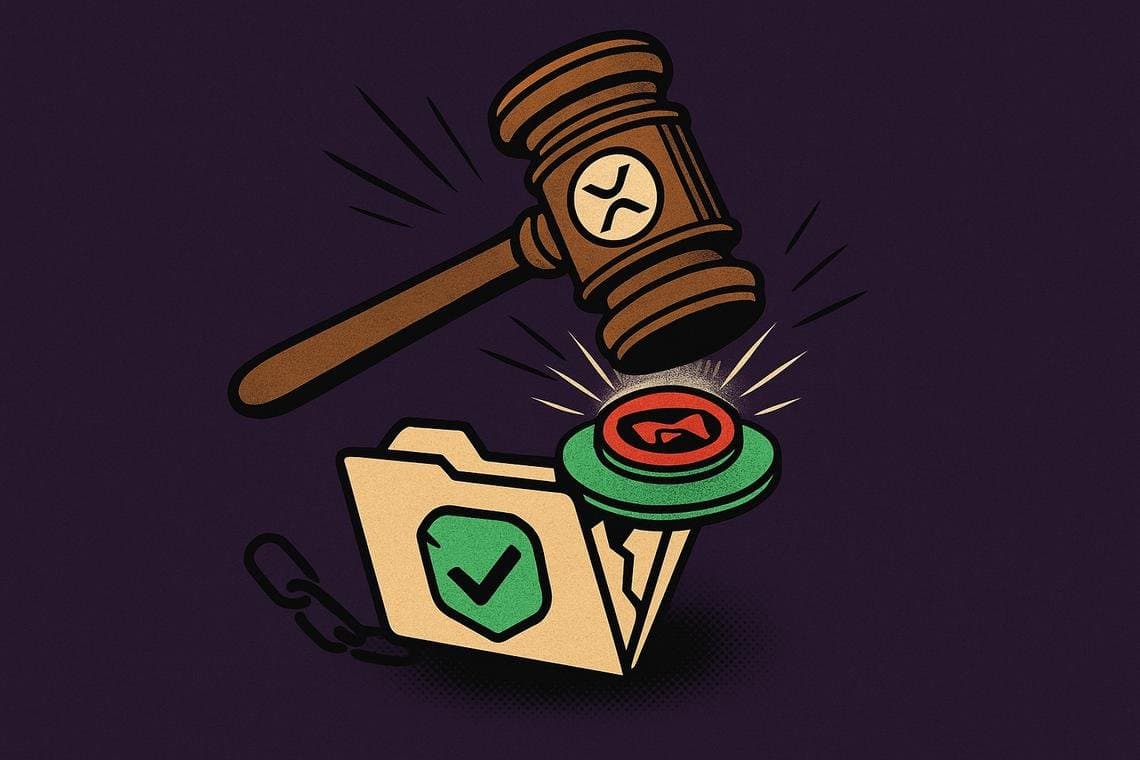
The ongoing saga of Ripple's legal battle with the U.S. Securities and Exchange Commission (SEC) serves as a critical case study in the cryptocurrency sector. When the SEC initiated its lawsuit in 2020, the stakes were higher than many realized, as Ripple’s CEO, Brad Garlinghouse, recently disclosed. The company's leadership faced a dire fork in the road: either dissolve the company entirely or wager everything on a protracted legal fight against a formidable government entity.
The Existential Threat of the SEC Lawsuit
The SEC's allegations claimed that Ripple had sold XRP as an unregistered security, which directly implicated both Garlinghouse and co-founder Chris Larsen. This dual attack represented not merely a legal hindrance but an existential threat, compelling Ripple to consider its futures. The dramatic option of shutting down and distributing XRP holdings to shareholders was on the table, which Garlinghouse claimed would effectively nullify the SEC's complaint while allowing them to walk away unscathed from years of litigation.
The Decision to Fight and Its Impact
Choosing to contest the SEC allegations resulted in substantial costs about $150 million over four years in legal fees. However, this strategy also preserved hundreds of jobs and the company's operational integrity. Garlinghouse’s retrospective approval of this decision underscores the risk-reward calculus that often underpins business strategies in the crypto landscape. The potential for XRP to be deemed non-security emerged not from immediate legal assurances but rather from strategic resilience amidst uncertainty. Ultimately, Judge Analisa Torres ruled that XRP itself is not a security, a ruling that likely shifted the entire regulatory landscape for cryptocurrencies.
Ripple’s predicament illustrates how the broader cryptocurrency market can be influenced by regulatory actions. Companies must tread cautiously, as the SEC's expansive authority can drastically alter operations and valuations in this volatile environment. The unexpected changes in SEC leadership, offering a more favorable outlook for Ripple, further highlight the unpredictability of regulatory frameworks affecting the industry.
The backdrop of financial struggle and workforce preservation gives an insight into Ripple’s decision-making process, evocative of many firms weathering similar storms. Companies in the crypto sphere must remain agile and informed, as evolving regulations can either stifle innovation or create pathways to new opportunities. The Ripple case serves as a vital lesson for investors and entrepreneurs alike about the necessity of bold strategic choices within a regulatory quagmire.
This material is informational and does not constitute financial advice.