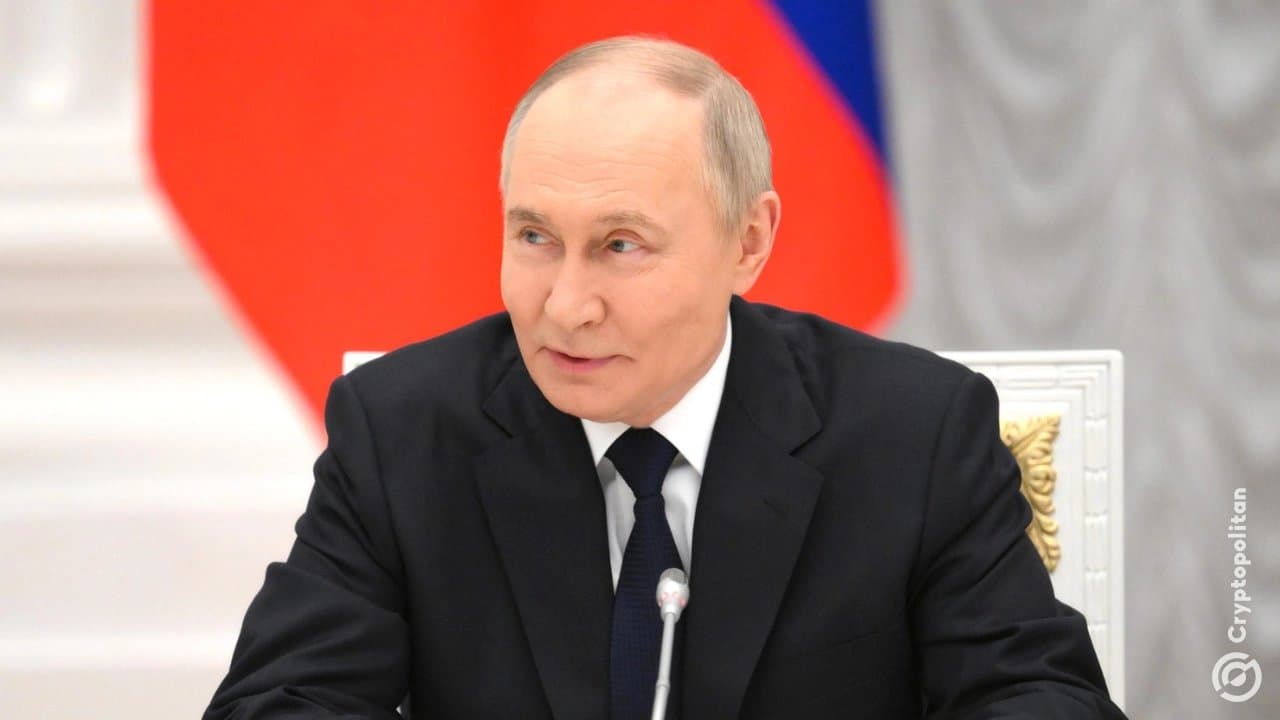
Vladimir Putin has signed Russia's first full digital currency law into effect. The legislation, titled "On Digital Currency and Digital Rights," now sits on the government's official legal portal after passing both chambers of parliament last month. It takes force September 1, 2026.
The nearly 300-page package spent months in parliamentary committees before the State Duma voted it through on July 21 and the Federation Council approved it four days later. Lawmakers first introduced the proposal back in April, so the timeline stretched longer than initially planned. Officials cited need to refine specific provisions as the reason for the summer delay.
What does the law actually allow? Russians can now legally buy, hold, and trade cryptocurrencies on licensed platforms. Investment activity gets the green light. Direct crypto payments, though, remain banned under the framework. The rules apply both to individual investors and to financial institutions wanting to operate in the space. Similar to how Japan established a dedicated crypto watchdog at its FSA, Russia is building formal oversight structures.
This move signals a major shift for Moscow. Russia had largely banned crypto activity over the past few years, despite widespread possession of digital assets among citizens. The new framework doesn't flip to full embrace, but it does carve out legal pathways where none existed before. Licensed exchanges and banks can now operate without legal jeopardy. Retail investors get regulatory clarity instead of legal ambiguity.
The timing reflects broader global trends. Governments from South Korea to the European Union are drafting crypto regulations rather than outright prohibitions. Some jurisdictions are stricter, others more permissive, but the pattern is clear: blanket bans are giving way to rulebooks.
This material is informational only and does not constitute financial advice or investment recommendation.