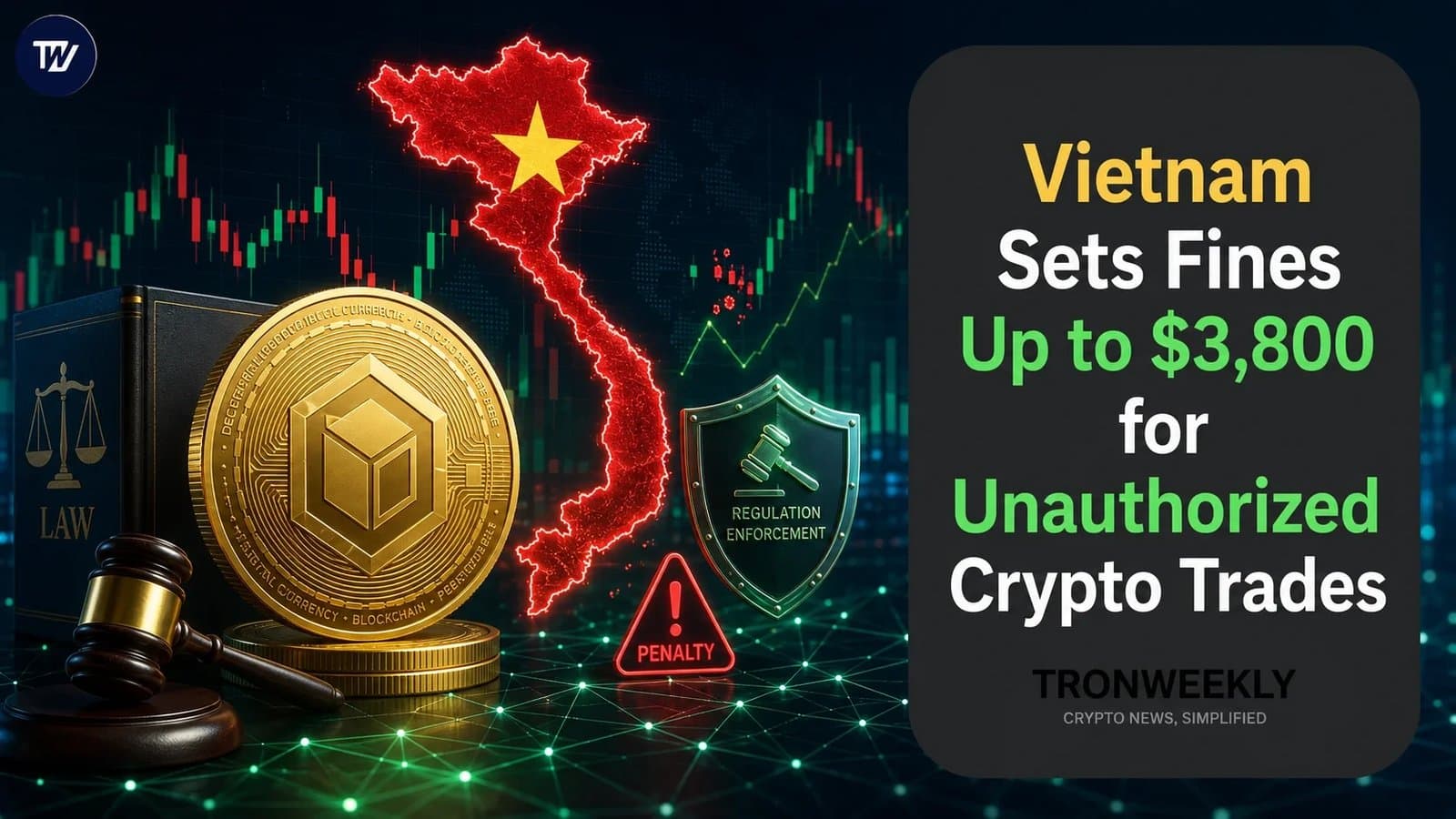
Vietnam has set definitive fines up to $1,900 for unauthorized crypto trading, marking a clear step toward consolidating its crypto market under regulated domestic platforms. Signed into law on July 16, Decree No. 284/2026/NĐ-CP activates September 1 and targets not only investors but also service providers and token issuers who operate outside the government-approved framework.
Regulatory Shift Toward Domestic Market Oversight
Fines ranging from 30 million to 50 million dong, approximately $1,140 to $1,900, will apply to those using unlicensed exchanges. More severe penalties, from 70 million to 100 million dong ($2,660 to $3,800), focus on purchasing assets restricted to foreign investors. These measures reflect Vietnam's strategic move to redirect capital flows into licensed domestic exchanges, thereby enhancing regulatory oversight. This is part of a broader effort to curb overseas trading activities, which officials have considered restricting since March.
The government’s approach aligns with its five-year pilot market plan, aiming to authorize a limited number of exchanges during this phase. Financial organizations like affiliates of Techcombank, VPBank, LPBank, VIX Securities, and Sun Group have reportedly passed initial screening rounds, indicating early support for the regulatory roadmap.
Implications for Crypto Firms and Investors
Service providers face fines of 50 million to 70 million dong for failing to verify client identities, while unlicensed crypto service operations and unauthorized marketing can incur penalties of 180 million to 200 million dong. These enforcement measures shows the importance of compliance with know-your-customer (KYC) and licensing requirements. By tightening these controls, Vietnam aims to build a more transparent and secure crypto ecosystem under state supervision.
Despite these restrictions, Vietnam remains one of the leading countries in crypto adoption. Chainalysis ranked it fourth in its 2025 Global Crypto Adoption Index, with transaction volumes exceeding $220 billion from July 2024 to June 2025. This juxtaposition of high adoption against restrictive regulation highlights a balancing act between growth and control.
- Penalties for unauthorized trading: $1,140 $1,900
- Fines for restricted asset purchases: $2,660 $3,800
- Service provider identity check failures: fines up to $3,000
- Unlicensed service operation and marketing fines: up to $7,600
The new regulatory landscape will likely encourage traders and firms to shift activity onto authorized domestic platforms, which could reduce liquidity on foreign exchanges but increase local market depth. Investors should anticipate heightened scrutiny and compliance demands, which may pose short-term challenges but could ultimately lead to a more stable environment.
This article provides information only and does not constitute financial advice.